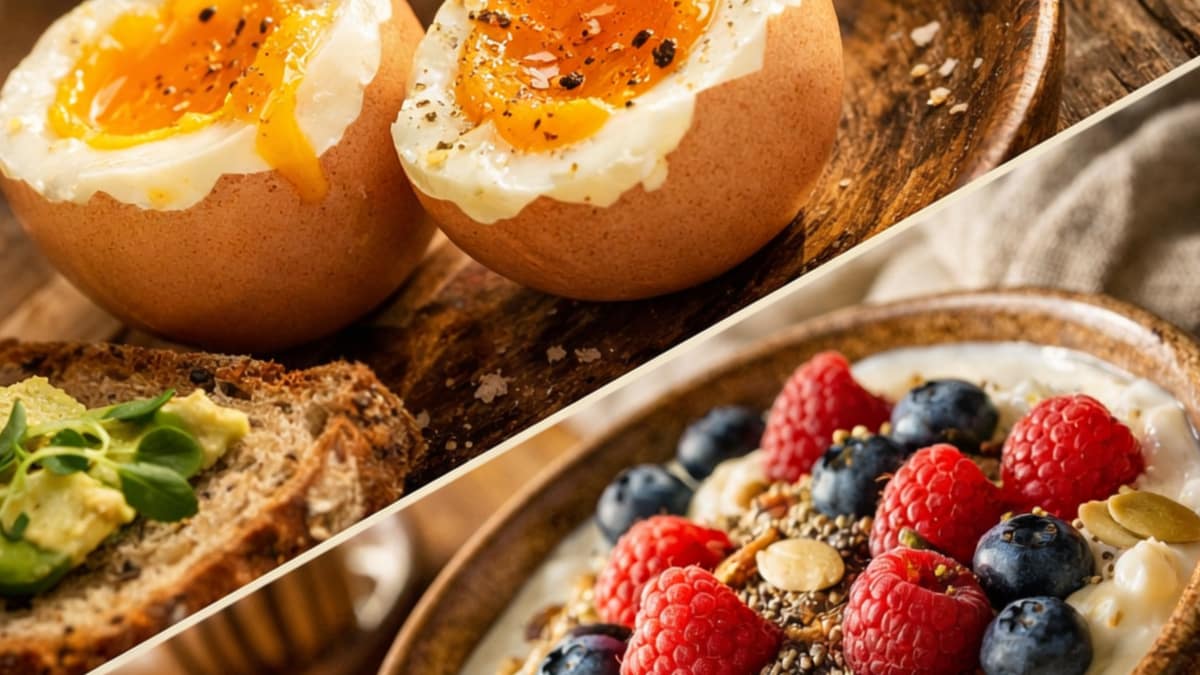
Picture the pharmacy aisle on a Wednesday afternoon. You are holding a box of menopause supplements that costs more than a family dinner, trying to remember whether this is the brand you already tried, or the one in the almost identical box that did nothing at all.
Here is the good news. A menopause reset over 50 can start in your own kitchen, with things you already do every day: what you eat first, when you drink your coffee, what you do after lunch. Below you’ll find three habits to try tonight, all ten at a glance with an honest note on the evidence, and a simple 7-day way to fit them in.
None of this replaces medical care. If you take medicine for diabetes, blood pressure or your thyroid, read the short safety notes before you change anything.
Start your menopause reset over 50 tonight: 3 habits
Let’s start with the three that take the least effort and have something real behind them. You don’t need to buy anything for any of them.
1. Eat your vegetables and protein first
Same plate, different order. Eat the vegetables and the chicken, fish, eggs or beans first, and save the bread, rice or potatoes for the last few bites. In a small study in adults with type 2 diabetes, eating the same meal in that order lowered the rise in blood sugar over the next two hours by about 73% (1). Later studies, including in people without diabetes, found smaller but similar effects.
Try it: at dinner tonight, finish half your vegetables before you touch the potatoes. That’s the whole habit.
2. Walk for 10 minutes after a meal
Working muscles can take sugar out of your blood partly without waiting for insulin. A 2022 review of studies found that even 2 to 5 minutes of light walking after meals lowered post-meal blood sugar compared with sitting still (2). Ten minutes is simply a comfortable, practical amount, not a tested dose.
Try it: when you put your fork down, set a 15-minute timer. When it rings, walk around the block, the garden or even the hallway. No gym clothes needed.
3. A warm gelatin drink before bed
Unflavored gelatin from the baking aisle costs pennies a serving. It supplies the building blocks your body uses to make its own collagen, and it is rich in glycine, an amino acid studied in small trials for sleep. Let’s be straight about it: the evidence for skin is promising but mixed, and for sleep it is early (3).
Try it: sprinkle 1 tablespoon (about 7 g) of gelatin over 2 to 3 tablespoons of cold water, leave it for 2 minutes, then stir in about 180 ml (¾ cup) of hot water and a squeeze of lemon. Drink it warm, an hour before bed. Gelatin comes from animals, so it doesn’t suit vegetarians or vegans.
Want a week of meals to go with these habits? Download the free Four-Hormone Menopause Meal Plan: 7 days, 21 recipes.
All 10 resets at a glance, with honest evidence ratings
These are the ten habits in my book The Zero-Cost Menopause Reset. Most take under ten minutes, and none needs a supplement, a subscription or equipment. I’ve given each one the same plain evidence note the book gives it, because you deserve to know which ones rest on strong research and which ones are worth testing for yourself.
- The Evening Collagen Ritual. A gelatin drink before bed. Evidence: promising but mixed for skin, early for sleep and joints.
- The Blood Sugar Rescue. Three changes to how you eat, not what you eat, including the food order above. Evidence: good, from small but repeated studies.
- The Muscle Signal. A breakfast with around 25 to 30 grams of protein, from eggs, Greek yogurt, cottage cheese or salmon. Evidence: good, mostly from older adults rather than menopausal women specifically.
- The Coffee Gap. Water first, coffee a little later, ideally with breakfast. Evidence: weak for any exact rule, so the book treats it as an experiment. You keep your coffee.
- The Muscle Sponge. The 10-minute walk after a meal. Evidence: strong.
- The Calm-Down Breath. A slow breathing pattern for stressful moments and hot flash panic. Evidence: good as a stress tool, weak for hot flashes, and the book says so plainly.
- The Evening Mineral Drink. A small, lightly salted citrus drink as a wind-down ritual. Evidence: not a proven treatment for night sweats, and not for everyone (see the safety notes).
- The Morning Face Flush. Two minutes of gentle massage for morning puffiness. A wellness habit, not a treatment.
- The Clock Recalibration. Ten to twenty minutes of morning daylight to help keep your body clock on time. Evidence: strong for light and the body clock, indirect for menopause specifically. Never look directly at the sun.
- The Gut Connection. A spoonful of sauerkraut or a small glass of kefir with a meal. Evidence: good that fermented foods can change your gut bacteria, untested for menopause symptoms.
If 3 a.m. wake-ups are your biggest problem right now, my guide to lemon balm for menopause sleep pairs well with resets 1 and 9.
How to start without overwhelm: the 7-day plan
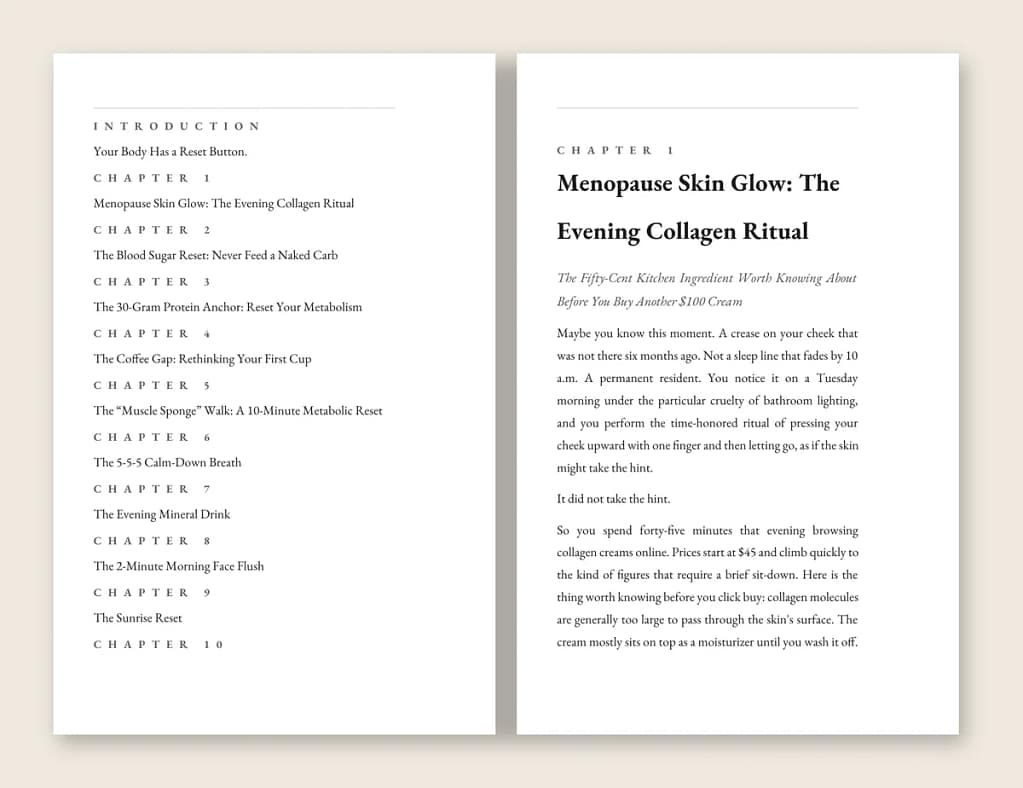
Here is my strongest piece of advice for a menopause reset over 50: don’t start all ten on Monday. When ten things change at once, you can’t tell what’s working, and you can’t keep it up. The book layers them over one week instead.
- Days 1 and 2: morning daylight and the coffee gap.
- Days 3 and 4: the protein breakfast and the food order rule.
- Day 5: the walk after lunch, plus the evening mineral drink if it suits you.
- Day 6: the morning face flush and the calm-down breath.
- Day 7: a teaspoon of sauerkraut or a small glass of kefir with lunch.
The trick is to hang each habit on something that already happens. While the morning kettle boils, you do the face flush. When you put your fork down at lunch, you set the walk timer. When you fill the kettle in the evening, you bloom the gelatin. You don’t need more willpower. You need fewer decisions.
Is The Zero-Cost Menopause Reset right for you?
This book is for you if you want a menopause reset over 50 without buying something new every month, you’d rather understand why a habit might help before you try it, and you want small changes that fit around a busy life. It is probably not for you if you want a strict diet plan or a promise of fast weight loss. You won’t find either inside.
Here is what you get:
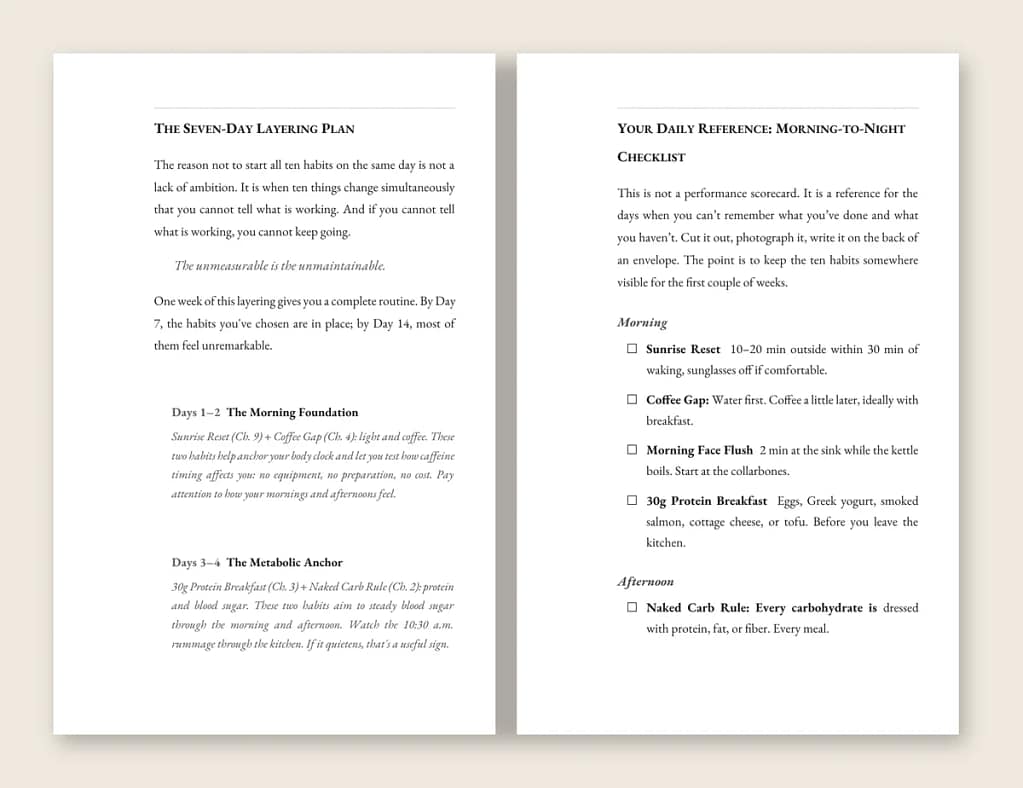
- Ten short chapters, one habit each, written in plain English, each with the exact steps to try it tonight.
- An honest evidence note in every chapter, so you know which habits rest on strong research and which ones are early or still being studied.
- A “curious about the research?” section at the end of each chapter, with the studies listed so you can look them up or take them to your doctor.
- The 7-day layering plan and a morning-to-night checklist you can photograph and stick on the fridge.
- Safety notes right next to each habit, so you know who should skip it or check with a doctor first.
- Nothing to buy. No supplements, no equipment, no program. Most of what you need is already in your cupboard.
Each chapter stands on its own. If a hot flash wakes you at 3 a.m., you can open the breathing chapter and try it right there in bed.

The Zero-Cost Menopause Reset, our own Life Cookery book, in Kindle and paperback.
See it on Amazon US · See it on Amazon UK
Prefer to cook your way through it? The same honest approach runs through my high protein slow cooker recipes for menopause, a good partner for the protein breakfast habit.
What the research says
Food order. The 73% figure comes from a small crossover study of 11 adults with type 2 diabetes, who ate the same meal of chicken, vegetables, bread and orange juice in different orders (1). The difference at single time points was smaller: about 29% lower at 30 minutes and 37% lower at one hour. Most of this research involves people with diabetes or prediabetes.
Walking after meals. A 2022 systematic review and meta-analysis found that short bouts of light walking after meals lowered post-meal blood sugar compared with sitting (2). Diabetes guidance also recommends activity after meals (4). This is the strongest evidence in the book.
Gelatin and glycine. In small, short trials, healthy adults who took 3 grams of pure glycine before bed reported better sleep quality (3). One tablespoon of gelatin gives roughly 1.4 grams of glycine, about half that amount, and nobody has tested gelatin tea itself for sleep.
Fermented foods. In a 10-week Stanford study of 36 healthy adults, the group that ate more fermented foods ended up with more varied gut bacteria and lower levels of 19 inflammation markers (5). The study did not look at menopause symptoms, and people ate about six servings a day.
Before you start: who should check with a doctor
- Diabetes medication: the food order rule and the post-meal walk can lower your blood sugar. If you take insulin or another glucose-lowering medicine, ask your doctor whether your dose needs watching, to avoid lows.
- Kidney disease or high blood pressure: skip the salted mineral drink, and ask before raising your protein, if you follow a salt-restricted or protein-restricted diet.
- Thyroid medication: changes to meal and coffee timing can affect how levothyroxine is absorbed, so keep taking it the way your doctor or pharmacist told you.
- Histamine intolerance: sauerkraut, kimchi and kefir are high in histamine and can trigger headaches or flushing.
- Hormone therapy or other medicines: don’t stop or change anything you’ve been prescribed. These habits can usually sit alongside medical treatment.
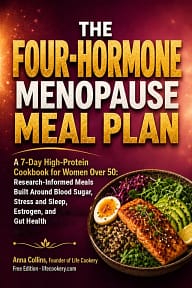
Free: The Four-Hormone Menopause Meal Plan
Seven days of easy high-protein meals for perimenopause and beyond: 21 recipes plus a simple swap guide, sent straight to your inbox.
Get the free 7-day planFrequently asked questions
What is a menopause reset over 50?
In this post and in the book, it means a handful of small daily habits around food, light, movement and sleep that may support how you feel during menopause. It isn’t a diet, a detox or a hormone treatment, and it doesn’t replace medical care.
Do I need to buy anything?
No. The most you’ll spend is a few dollars or pounds on unflavored gelatin and a jar of sauerkraut or a bottle of kefir. Everything else uses food and routines you already have.
Which habit should I try first?
Start with the 10-minute walk after a meal. It has the strongest research behind it and takes no planning. If mornings are your hardest time, try morning daylight and the protein breakfast next.
Will these habits help with weight loss?
The book doesn’t promise weight loss. Some habits, like the protein breakfast and steadier blood sugar after meals, may make it easier to feel full and avoid the afternoon slump. That is as far as the evidence goes.
Is the book available as a paperback?
Yes. The Zero-Cost Menopause Reset is available on Amazon in Kindle and paperback. Both include the morning-to-night checklist you can copy or photograph.
Can I do these habits while taking HRT?
Most of them can usually sit alongside hormone therapy. Don’t stop or change any prescribed medicine on your own, and check bigger diet changes with your clinician or pharmacist.
A note from Anna
You don’t have to fix everything this week. Pick one habit from this page, the walk or the food order, and try it for three days. Notice how your afternoons feel. That small, free experiment is how every reset in the book is meant to start.
With you in the kitchen,
Anna
Medical disclaimer
This post is for general information and education and is not medical advice. Anna Collins is not a doctor or a dietitian. Talk to your doctor before changing your diet or routine if you have diabetes, kidney disease, high blood pressure, a thyroid condition or histamine intolerance, take prescribed medicine, or are pregnant or breastfeeding.
Disclosure
The Zero-Cost Menopause Reset is our own Life Cookery book, and Life Cookery earns royalties when you buy it. The Amazon links on this page are not affiliate links. The US link carries an Amazon tracking code that shows us which posts readers find useful, and it doesn’t change the price you pay.
Sources
- Shukla AP, et al. Food order has a significant impact on postprandial glucose and insulin levels. Diabetes Care. 2015;38(7):e98-e99. PMID 26106234
- Buffey AJ, et al. The acute effects of interrupting prolonged sitting time in adults with standing and light-intensity walking on biomarkers of cardiometabolic health in adults: a systematic review and meta-analysis. Sports Medicine. 2022;52(8):1765-1787. PMID 35147898
- Bannai M, Kawai N. New therapeutic strategy for amino acid medicine: glycine improves the quality of sleep. Journal of Pharmacological Sciences. 2012;118(2):145-148. PMID 22293292
- Colberg SR, et al. Exercise and type 2 diabetes: joint position statement. Diabetes Care. 2010;33(12):e147-e167. PMID 21115758
- Wastyk HC, et al. Gut-microbiota-targeted diets modulate human immune status. Cell. 2021. PMID 34256014