

If your jeans fit differently at the waist even though you eat much the same as you always have, you are not imagining it.
Around menopause, falling estrogen changes where the body tends to store fat. More of it settles around the middle and less on the hips and thighs. Add a few broken nights, a little less muscle than you had at 35 and the everyday stress of this stage of life, and the old rule of eating less and moving more stops working the way it used to.
If you want to lose menopause belly fat naturally, you don’t have to skip meals, live on salad or punish yourself at the gym. Below are five gentle changes with reasonable evidence behind them, a simple day you could try tomorrow, and an honest look at who should not try fasting at all.
If you would rather have the whole thing laid out day by day, I will show you what is inside my book, The Menopause Cortisol Belly Reset, near the end.
Why Belly Fat Changes After Menopause
Several things shift at once, and cortisol is only one of them.
- Estrogen. Before menopause, estrogen tends to steer fat toward the hips and thighs. As levels fall, more fat is stored deeper in the abdomen, around the organs. The International Menopause Society notes that aging itself explains much of midlife weight gain, while the drop in estrogen changes where the fat goes (2).
- Muscle. Muscle mass slowly declines from middle age unless you work to keep it, and less muscle means you use a little less energy each day.
- Sleep. Hot flashes and night waking are common. In a small 2022 trial, 12 young adults limited to four hours of sleep a night for two weeks ate around 300 extra calories a day and gained fat inside the abdomen (5). They were not women over 50, but it is a good reason to take sleep seriously.
- Stress. Ongoing stress can affect appetite, sleep and the energy you have left for cooking. It matters, but it is not the root cause of every change.
Harvard Health’s guide to menopausal belly fat describes the same mix of hormones, age and daily habits (1). The useful part is that you can work on most of it.
If you would like the protein step done for you, start with my free 7-day high-protein meal plan.
Why Eating Less and Exercising More Isn’t Always the Whole Answer
Calories still count, and no plan works if it ignores them. The trouble is that a steep cut makes most women hungrier and more tired. You start moving less without noticing, and the plan gets harder to keep every week. Long cardio sessions on top of that can leave you ravenous by evening.
What tends to last after 50 is quieter: enough protein to stay full, regular meals, strength work to protect muscle and better sleep. None of these are dramatic, which is exactly what makes them easier to keep for months.
5 Gentle Changes Worth Trying After 50
1. Put about 30 grams of protein in your main meals
Protein helps you feel full, and together with strength training it helps you keep muscle while you lose weight (6). Many women eat a small breakfast, a light lunch and most of their protein at dinner. Spreading it across the day is easier than it sounds.
A simple breakfast: 1 cup (about 225 g) of plain 2% Greek yogurt, a handful of berries and 2 tablespoons of hemp seeds. That comes to roughly 28 grams of protein. Two eggs scrambled with half a cup of cottage cheese gets you to a similar number.
If you have kidney disease or have been told to limit protein, follow your doctor’s advice instead.
2. The Sacred Pause: start gently, not aggressively
You don’t need to jump into long fasting windows. For most women, a manageable first step is a 12-hour overnight break: finish dinner by 7 pm and have breakfast at 7 am. The main benefit is practical. It ends the late-evening snacking that quietly adds up.
In the book, this 12-hour pause covers only the first three days. After that, breakfast moves an hour later each day, and some women settle into a 16:8 pattern, eating within eight hours. Sixteen hours is a ceiling, not a target. If 14 hours suits your body and your schedule better, stay there.
It is worth being honest about the evidence. A Cochrane review published in 2026 pooled 22 trials and found that intermittent fasting led to about the same weight loss as ordinary calorie advice (3). A small 2024 study in postmenopausal women found that 16:8 combined with exercise gave some better results than exercise alone (4). So fasting is not magic. Its real advantage is that it swaps a hundred small food decisions for one: when the kitchen closes.
3. Walk after meals and lift something twice a week
A 15-minute walk after your largest meal is easy to fit in and may help with blood sugar after eating. Strength training matters even more after 50. It helps you hold on to the muscle that tends to slip away with age and during weight loss, and it supports bone density (7).
You don’t need a gym. Chair squats, wall push-ups and lifting full grocery bags with good form, for 10 minutes twice a week, is a real start. Harder exercise is fine too, as long as you enjoy it and recover well.
4. Protect your sleep, especially at 3 am
Short sleep makes hunger harder to manage the next day. If you wake between 2 and 4 am, try a few changes for a week: no caffeine after midday, screens off an hour before bed, a cooler bedroom and less alcohol in the evening. If you are awake for more than 20 minutes, get up, sit somewhere dim with a dull book and go back to bed when you feel sleepy. Turn the clock away so you can’t check it.
Waking with a racing heart has many possible causes, including hot flashes, alcohol, anxiety, and thyroid or heart problems. If it happens often, mention it to your doctor rather than putting it down to cortisol.
5. Lower the background stress where you can
Stress makes cravings, sleep and meal planning harder. Small habits do more than big resolutions: a few slow breaths with a hand on your chest when you feel wound up, ten minutes outside in morning daylight, and two lines in a notebook before bed about what went well that day. They won’t melt fat. They make the rest of the plan easier to stick with on a hard week.
What You Can Try Tomorrow
Here is one easy day, built from the five changes above:
- 7 am: a glass of water, then the Greek yogurt bowl (about 28 g protein).
- Lunch: a salmon salad with 100 g of canned salmon, arugula, cucumber, pumpkin seeds and a little olive oil and lemon (about 30 g protein, one of the recipes in the book).
- Dinner by 7 pm: half the plate vegetables, a generous portion of chicken, fish, tofu or beans, and a slow carb such as sweet potato or lentils.
- After dinner: a 15-minute walk.
- From 7 pm: kitchen closed. Water and herbal tea are fine.
- 9 pm: screens off, book on.
That is a 12-hour overnight break and around 90 grams of protein, without counting a single calorie.
When Intermittent Fasting May Not Be Right for You
Please talk to your doctor before trying any fasting window if you:
- take insulin, sulfonylureas, a GLP-1 medicine or anything else that lowers blood sugar
- have, or have ever had, an eating disorder or a difficult relationship with food
- are underweight, over 65 or already losing muscle
- have kidney, liver, heart or gallbladder disease, or a history of fainting or low blood pressure
- take morning medication that has to be taken with food
And at any point, if you feel shaky, dizzy, sweaty or confused during a fasting window, stop and eat. A longer window is never worth feeling unwell.
Ready for a Plan You Don’t Have to Figure Out Yourself?
Knowing what to change is the easy part. Fitting it into a real week, and knowing what to do when day five feels hard, is where most plans fall apart.
That is why I wrote The Menopause Cortisol Belly Reset (Second Edition). It is a 10-day plan to build a calmer, more regular routine around food, movement and sleep. It is not a promise to lose belly fat in 10 days. Ten days is how long it takes to get the habits in place.

Inside the book you will find:
- the full Sacred Pause schedule, from a 12-hour start to a window that suits you, with the times for each day
- one clear rule for when to stop a fasting window and eat, plus extra guidance if you take medication that lowers blood sugar
- the Protein Anchor plate method and 12 recipes with nutrition figures, in US and metric measures
- a shopping list of foods worth keeping in the house
- simple walking and strength routines you can do at home
- a chapter on 3 am waking and one on what to do when the scale stops moving
- the studies behind each chapter, with the weak spots named plainly

No expensive supplements. No punishing workouts. No miracle promises. Just a clear place to start.
See The Menopause Cortisol Belly Reset on Amazon →
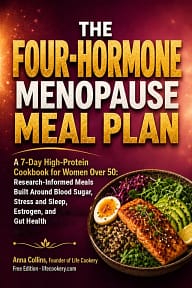
Free: The Four-Hormone Menopause Meal Plan
Seven days of easy high-protein meals for perimenopause and beyond: 21 recipes plus a simple swap guide, sent straight to your inbox.
Get the free 7-day planFrequently Asked Questions
Can you lose menopause belly fat naturally?
Many women can bring their waist measurement down with steady changes to food, activity and sleep, although progress is usually slower than it was at 30. Fat comes off the whole body rather than one spot, so sit-ups alone won’t shift it. Measuring your waist once a week is often more encouraging than the scale.
Is 16:8 fasting safe for women over 50?
For many healthy women it can be, if you build up slowly and eat enough protein in your eating window. It is not right for everyone, so check the list above and speak to your doctor first if you take anything that lowers blood sugar. A 12-hour overnight break is a reasonable place to start, and for some women it is enough.
What is the best exercise for menopause belly fat?
The one you will keep doing. For most women that means daily walking plus strength training two or three times a week. Strength work protects muscle and bone, and walking adds up without leaving you exhausted.
Looking for meals to go with this? Try these easy high-protein slow cooker recipes for menopause or see how to build 30 g protein meals from food you already buy.
Want the full 10-day plan? Get The Menopause Cortisol Belly Reset on Amazon.
Medical disclaimer
This article is for general information and is not medical advice. If you have diabetes or take medication that lowers blood sugar, have kidney disease, are pregnant or breastfeeding, or have a history of disordered eating, talk to your doctor or a registered dietitian before changing when or how much you eat.
Disclosure
I wrote The Menopause Cortisol Belly Reset, and Life Cookery earns money when you buy it. The Amazon links on this page are tracking links that show us which articles readers come from. They do not change the price you pay.
Sources
- Harvard Health Publishing. Why am I gaining belly fat during menopause? health.harvard.edu
- International Menopause Society. IMS Recommendations. imsociety.org
- Garegnani LI, Oltra G, Ivaldi D, et al. Intermittent fasting for adults with overweight or obesity. Cochrane Database of Systematic Reviews. 2026;(2):CD015610.
- Time-restricted eating combined with exercise in postmenopausal women, 2024. PubMed 39434160
- Covassin N, Singh P, McCrady-Spitzer SK, et al. Effects of experimental sleep restriction on energy intake, energy expenditure, and visceral obesity. Journal of the American College of Cardiology. 2022;79(13):1254-1265. PubMed
- Nunes EA, Colenso-Semple L, McKellar SR, et al. Systematic review and meta-analysis of protein intake to support muscle mass and function in healthy adults. Journal of Cachexia, Sarcopenia and Muscle. 2022;13(2):795-810.
- Massini DA, Nedog FH, de Oliveira TP, et al. The effect of resistance training on bone mineral density in older adults: a systematic review and meta-analysis. Healthcare (Basel). 2022;10(6):1129.