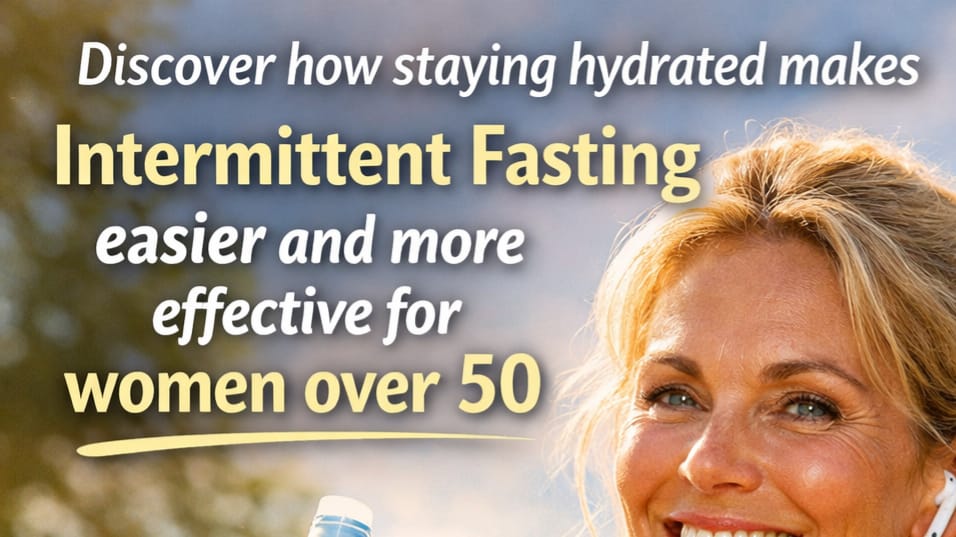
If you’ve been hearing about intermittent fasting but aren’t sure whether it’s a good idea after menopause, you’re asking the right question.
Maybe you’d like to lose a little weight around your middle. Maybe you simply want to stop grazing in the evening. But you’ve also heard that fasting can raise cortisol, disturb sleep or make it harder to hold on to muscle. So where does that leave you?
The good news is that fasting after 50 doesn’t have to mean skipping meals or pushing through hours of hunger, and you certainly don’t have to start with 16 hours. In this guide, we’ll compare three common eating schedules, look at what the research actually shows, and see why protein matters just as much as the clock.
I’ll also show you what I call the Sacred Pause, a gentler way to think about your overnight break from food. No fasting competitions and no miracle promises, just practical choices you can talk over with your doctor and adapt to your life.
Is Intermittent Fasting After 50 Safe?
For many healthy women, a gentle overnight break from food is a safe place to start. Longer windows need more care. Talk to your doctor first if you have diabetes, high blood pressure or a thyroid condition, need to take morning medicine with food, or have a history of an eating disorder.
If you take insulin, or a medicine that makes your body release more insulin (such as a sulfonylurea), please don’t fast without a plan from your diabetes team. The American Diabetes Association advises medical monitoring for fasting on these medicines (4). The full list is in the section on when to stop or avoid fasting, further down.
Whichever schedule you pick, what you eat still matters. My free 7-day high-protein meal plan plans a full week for you.
What Changes Around Menopause?
Do you remember your first diet? Maybe you were 25, skipped dessert for a week and your jeans zipped up again. Back then, eating a little less seemed to do the trick.
Calories still matter after 50. What changes is how hard the old approach feels. As estrogen falls, more fat tends to settle around the middle instead of the hips and thighs. Muscle slowly declines unless you work to keep it. Hot flashes and night waking cut into sleep, and short sleep makes you hungrier the next day. Stress plays a part too, through appetite, sleep and energy, but cortisol is not a switch that locks fat in place.
That’s why very strict diets often backfire at this age. You get hungrier and more tired, you move less without noticing, and it gets hard to eat enough protein to protect your muscle. A plan you can keep for months beats a plan you can only survive for a week.
12:12 vs. 14:10 vs. 16:8
| Schedule | Example eating hours | How hard | Good for |
|---|---|---|---|
| 12:12 | 7 a.m. to 7 p.m. | Easy | Ending late-night snacking. A first step for most women |
| 14:10 | 9 a.m. to 7 p.m. | Moderate | Women who find 12:12 easy and want a bit more structure |
| 16:8 | 11 a.m. to 7 p.m. | Harder | Women who feel well on 14:10 and like two main meals a day |
None of these is a gold standard. In 2026, Cochrane reviewers looked at 22 randomized trials and found no clear weight-loss advantage for intermittent fasting over standard advice to eat fewer calories (1). A 2026 review of 31 studies in adults aged 60 and over found, in its analysis of randomized trials, an average extra loss of about 1.9 kg (4 lb) with 16:8, while stressing that the evidence is still limited and short-term (2). In the nine-month HALLO-P pilot study of adults aged 60 and older, the time-restricted eating group lost about 1 kg on average, compared with roughly 4.4 kg and 6.7 kg in the two calorie-restriction groups (3).
So choose the window you can live with. The idea is to cut back on mindless evening snacking and make your meals more predictable.
What about autophagy?
You may have read that 16 hours of fasting switches on autophagy, the cell recycling process whose discovery won the 2016 Nobel Prize. Autophagy is real, but most of what we know comes from cell and animal studies, and there is no proven hour at which it switches on in a woman over 50 (6). It isn’t a reason to push for a longer window.
The Sacred Pause: A Gentler Way to Start
I call the overnight break the Sacred Pause because “fasting” sounds like punishment, and this is meant to be the opposite: a calm, flexible routine rather than a test of willpower. Here is what a first day can look like:
- 7 a.m.: water or black coffee, then a breakfast with protein.
- 12:30 p.m.: lunch.
- 6:30 p.m.: dinner, finished by 7 p.m..
- After dinner: a short walk around the block, 10 to 15 minutes.
- 7 p.m. onward: no more food until breakfast. Water and caffeine-free herbal tea are fine.
That’s 12 hours. Stay there for at least a few days. If you feel well and want more, move breakfast 30 to 60 minutes later every few days. If you feel worse, go back a step. A longer window is never worth feeling unwell.

What to Eat to Protect Muscle After 50
What you eat matters as much as when. A shorter eating window can make it harder to get enough protein, and protein together with strength training is what helps you keep muscle (5). On the plate, we use a simple 1-2-3 order:
- Vegetables first, for fiber and volume.
- Protein second. This is your Protein Anchor: aim for roughly 25 to 30 grams at each main meal.
- Carbohydrates last, such as sweet potato, beans or whole-grain bread.
Eating in this order may soften the rise in blood sugar after a meal for some people. Treat it as a habit to try, not a rule.
What 30 grams of protein actually looks like: 3 large eggs give you about 19 grams. Add ¾ cup (170 g) of plain Greek yogurt, and you’ll get roughly 34 to 37 grams in total, depending on the brand. A 4 oz (115 g) cooked salmon fillet with a few spoonfuls of cooked lentils gets you close to 30 grams too.
Move in a way that supports you
You don’t need punishing cardio. Walking after your biggest meal is an easy win and may blunt the blood sugar rise that follows it. Strength training a couple of times a week matters especially after 50, because it helps you keep muscle and bone. Body-weight exercises count, too. If you enjoy harder workouts and recover well, keep them. A short rise in cortisol during exercise is normal and doesn’t mean your body is storing fat.
What Breaks a Fast?
If you want a strict, calorie-free pause:
- Fine: water (plain or sparkling), black coffee, plain tea (green, black or herbal).
- Ends a strict fast: milk, cream, oat milk, bone broth, juice, or anything else with calories.
- It depends: zero-calorie sweeteners. They add little or no energy, and the research on whether they affect insulin is mixed.
A splash of milk in your coffee adds a small amount of energy. It technically ends a calorie-free fast, but it doesn’t cancel out the rest of your routine. If it’s what makes the pause doable for you, it’s a reasonable trade. For more detail, see the full list of what to drink while fasting after 50.
When to Stop or Avoid Fasting
Stop fasting if you feel shaky, dizzy, sweaty or unusually weak, or notice a racing heartbeat. If you have diabetes and suspect low blood sugar, check your glucose if you can and follow your prescribed hypoglycemia treatment plan. Severe confusion, fainting or difficulty swallowing needs emergency medical help. Don’t try to fix any of these with salt, oil or more coffee.
Don’t start fasting without your doctor’s advice if you:
- take insulin, a sulfonylurea, or another diabetes medication that may need changes in timing or dosage when you fast (4)
- are pregnant or breastfeeding
- have, or have ever had, an eating disorder
- are underweight or already losing muscle
- have kidney, liver or heart disease, low blood pressure or a history of fainting
- take medication that must be taken with food (a 12-hour overnight break may still work, but check first)
Want a Step-by-Step Plan Instead of Figuring It Out Alone?
Understanding fasting is one thing. Making it work around real meals, family dinners and everyday life is another. That’s why I wrote The Menopause Cortisol Belly Reset.
Inside, you’ll find:
- a day-by-day schedule for the Sacred Pause, so you know exactly when breakfast moves and when to hold
- the warning signs that mean stop and eat, and why women taking diabetes medication need an individualized plan from their healthcare team
- how to build a Protein Anchor plate, with 12 recipes that list protein, calories and carbs per serving
- a grocery list and an easy at-home walking and strength routine
- practical ideas for two common frustrations: waking at 3 a.m. and seeing little change on the scale
The goal isn’t to fast longer or eat less at any cost. The first ten days are about building a routine, not racing toward a number on the scale.
Explore The Menopause Cortisol Belly Reset on Amazon →
Wondering why your waist is changing in the first place? Read Lose Menopause Belly Fat Naturally: 5 Gentle Changes for Women Over 50.
Free: The Four-Hormone Menopause Meal Plan
Seven days of easy high-protein meals for perimenopause and beyond: 21 recipes plus a simple swap guide, sent straight to your inbox.
Get the free 7-day planFrequently Asked Questions
Is the Sacred Pause safe if I have health issues?
Ask your doctor first, especially if you have diabetes, high blood pressure or a thyroid condition. If you take medication that needs food, take it as prescribed. A shorter pause, or no fasting at all, may be the right choice for you, and that’s fine.
What if I get a headache while fasting?
A mild headache may be related to dehydration, caffeine withdrawal or not eating enough. Drink some water, and stop fasting if you feel unwell. Get medical advice for severe, unusual or recurring headaches.
Can I use stevia in my morning coffee?
Stevia has almost no calories, and the evidence on sweeteners and insulin is mixed. If you want a strictly plain pause, skip it. If a little stevia is what helps you keep going, it’s unlikely to undo your progress.
Why am I waking up at 3 a.m.?
Night waking after 50 has many possible causes, including hot flashes, stress, alcohol, sleep apnea and medication. Low blood sugar is only one possibility. If a small protein-rich snack before bed helps, that’s useful to know. If you wake most nights, snore loudly or feel exhausted during the day, talk to your doctor.
How long is the reset?
The plan in the book lasts 10 days. That’s long enough to build the habits, not a deadline for results. After that, you keep what works for you and drop what doesn’t.
Medical disclaimer
This article is for general information and is not medical advice. If you have diabetes or take medication that lowers blood sugar, have kidney, liver or heart disease, are pregnant or breastfeeding, or have a history of disordered eating, talk to your doctor or a registered dietitian before changing when or how much you eat.
Disclosure
I wrote The Menopause Cortisol Belly Reset, and Life Cookery earns money when you buy it. The Amazon link on this page is a tracking link that shows us which articles readers come from. It doesn’t change the price you pay.
Sources
- Garegnani LI, Oltra G, Ivaldi D, et al. Intermittent fasting for adults with overweight or obesity. Cochrane Database of Systematic Reviews. 2026;(2):CD015610.
- Systematic review of intermittent fasting in adults aged 60 and over (31 studies). Nutrients. 2026;18(9):1450. mdpi.com
- Houston DK, et al. Health, Aging and Later-Life Outcomes pilot (HALLO-P): caloric restriction versus time-restricted eating in older adults. Journals of Gerontology: Series A. 2026. doi:10.1093/gerona/glag061
- American Diabetes Association. Standards of Care in Diabetes 2026. Diabetes Care. 2026;49(Suppl 1).
- Nunes EA, Colenso-Semple L, McKellar SR, et al. Systematic review and meta-analysis of protein intake to support muscle mass and function in healthy adults. Journal of Cachexia, Sarcopenia and Muscle. 2022;13(2):795-810.
- Bagherniya M, Butler AE, Barreto GE, Sahebkar A. The effect of fasting or calorie restriction on autophagy induction: a review of the literature. Ageing Research Reviews. 2018;47:183-197. PMC6104508