It’s 6:30 p.m. You’re tired in a way that sleep doesn’t quite fix, and the fridge holds half a bag of spinach, some yogurt and good intentions. Toast for dinner starts to look like a reasonable life choice.
This is where a slow cooker earns its counter space. You spend 10 to 15 minutes in the morning, and dinner cooks while you get on with your day. Below you’ll find five high protein slow cooker recipes, each with about 30 grams of protein per serving, plus how long they take, whether they freeze and what to serve them with.
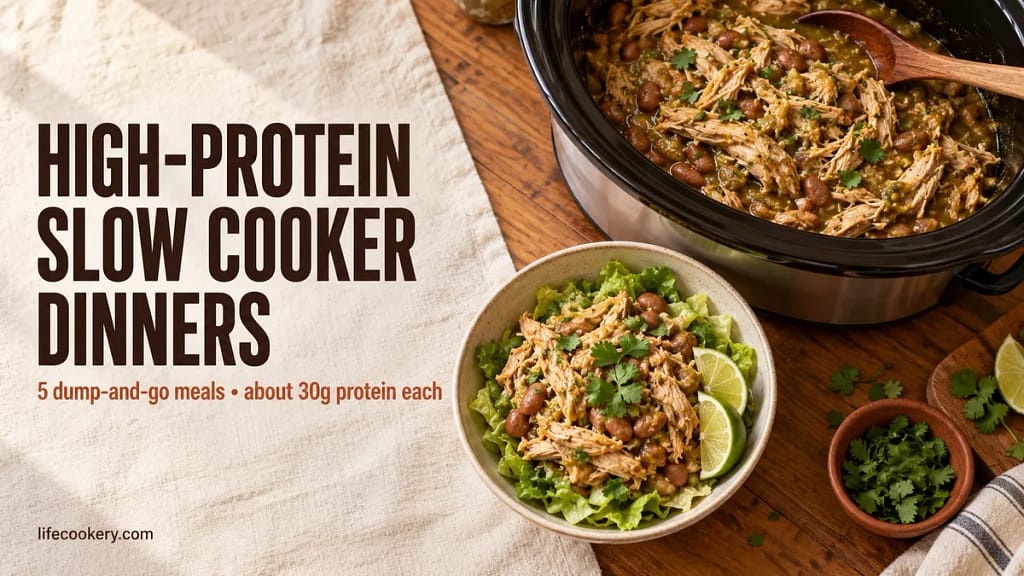
Why about 30 grams of protein at dinner?
After menopause, holding on to muscle often takes more effort, and many researchers now suggest women eat more protein than the old minimum, spread across the day. About 25 to 30 grams at each main meal is a practical target, and it’s easy to hit with one good serving of chicken, pork, turkey or lentils.
Protein works best alongside movement, so if you’ve started a few squats or band exercises, your dinner plate can back them up. Our Menopause Reset resource hub has simple daily habits to pair with it. (If you have kidney disease, check with your doctor before you eat more protein. There’s more on this near the end.)
If you want the studies behind that number, you’ll find them near the end of this post.
5 high protein slow cooker recipes (about 30g each)
Before you start, two safety basics: always thaw meat and poultry first (never put it in frozen), and check the thickest piece with a food thermometer: 165°F (74°C) for chicken and turkey, 145°F (63°C) plus a 3-minute rest for pork.
How we counted: protein comes from the main protein ingredients, using USDA FoodData Central values, so the real number is a little higher once vegetables and sauce add theirs. Calories include every ingredient except optional toppings and sides.
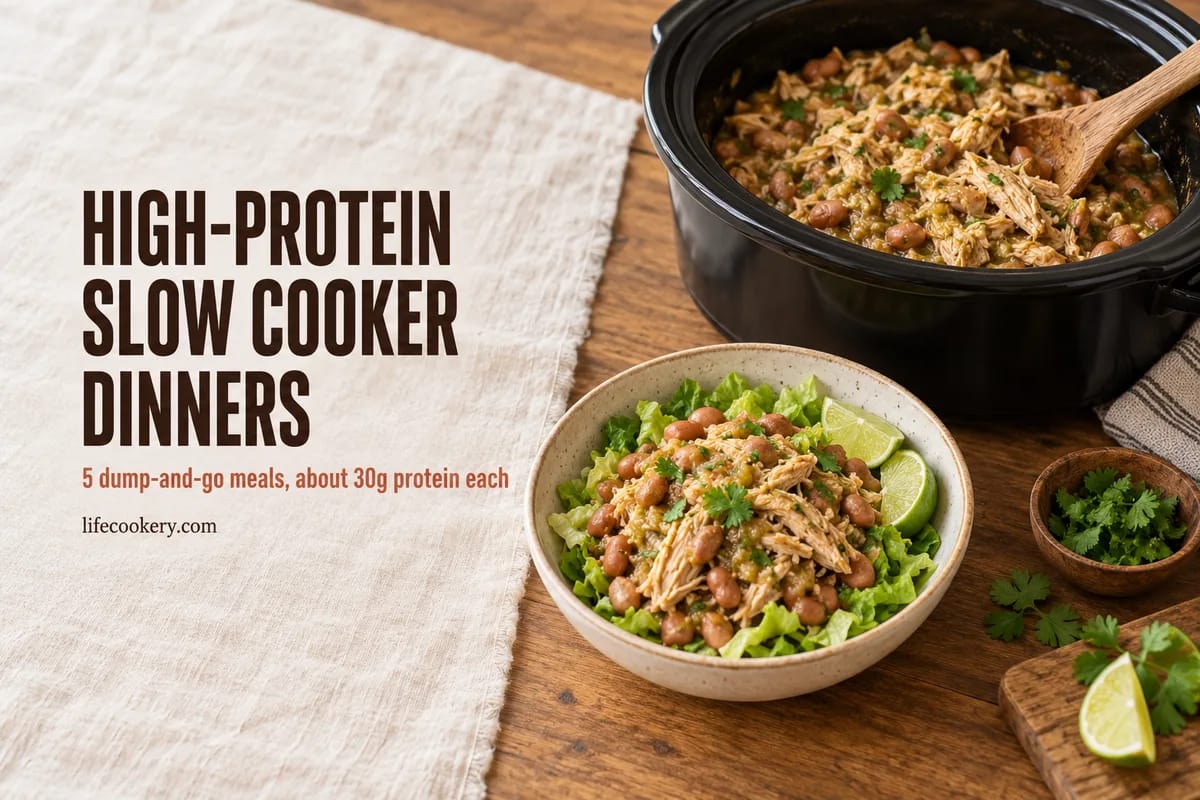
1. Salsa Verde Chicken Taco Bowls
About 30 g protein | about 245 calories per serving | Serves 4
Prep: 10 minutes | Cook: HIGH 1 hour, then LOW 3 to 4 hours | Freezer-friendly: yes | Serve with: rice, lettuce or warm tortillas
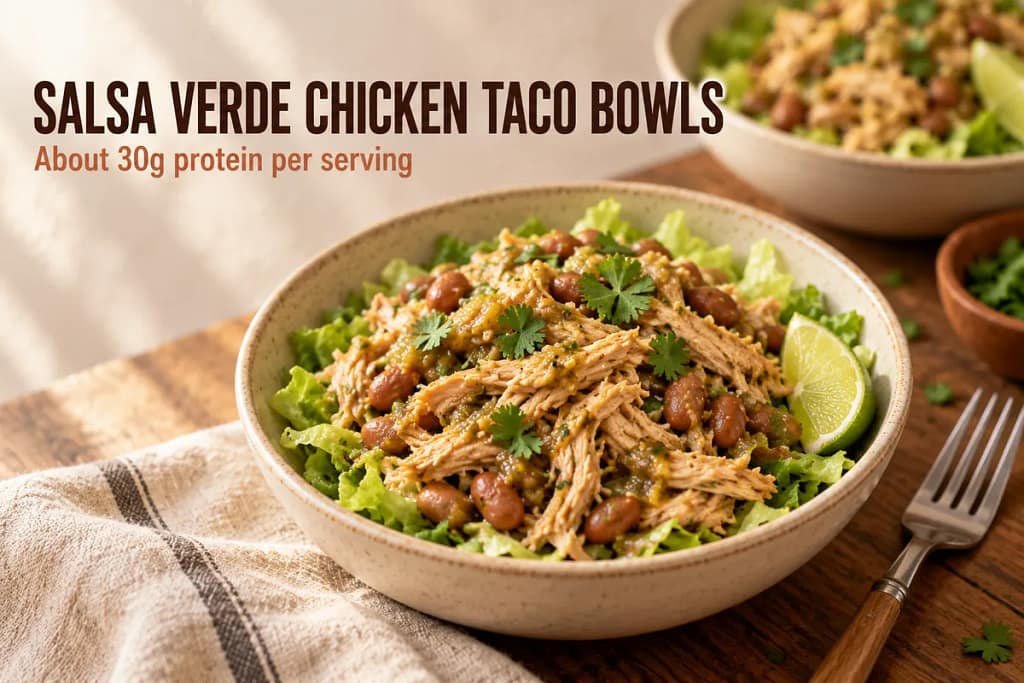
- 450 g (1 lb) boneless, skinless chicken breasts, thawed
- 1 can or tin (400 to 425 g / 14 to 15 oz) pinto beans, drained and rinsed
- 1 jar (about 450 g / 16 oz) salsa verde
- 1 small onion, sliced
- 1 tsp ground cumin, ½ tsp garlic powder
- To serve: shredded lettuce, lime wedges, fresh cilantro (coriander)
Put the onion and beans in the slow cooker. Lay the chicken on top, sprinkle with cumin and garlic powder, and pour the salsa verde over everything. Cook on HIGH for 1 hour, then LOW for 3 to 4 hours, until the chicken reaches 165°F (74°C). Shred it with two forks right in the pot and stir.
Pack one portion for tomorrow’s lunch before you sit down to eat.
Protein math: chicken breast 102 g + pinto beans 17 g = 119 g ÷ 4 = about 30 g per serving.
2. Chicken Thigh and Red Lentil Curry
About 34 g protein | about 350 calories per serving | Serves 4
Prep: 15 minutes | Cook: HIGH 1 hour, then LOW 4 to 5 hours | Freezer-friendly: yes | Serve with: rice, naan or a simple cucumber salad
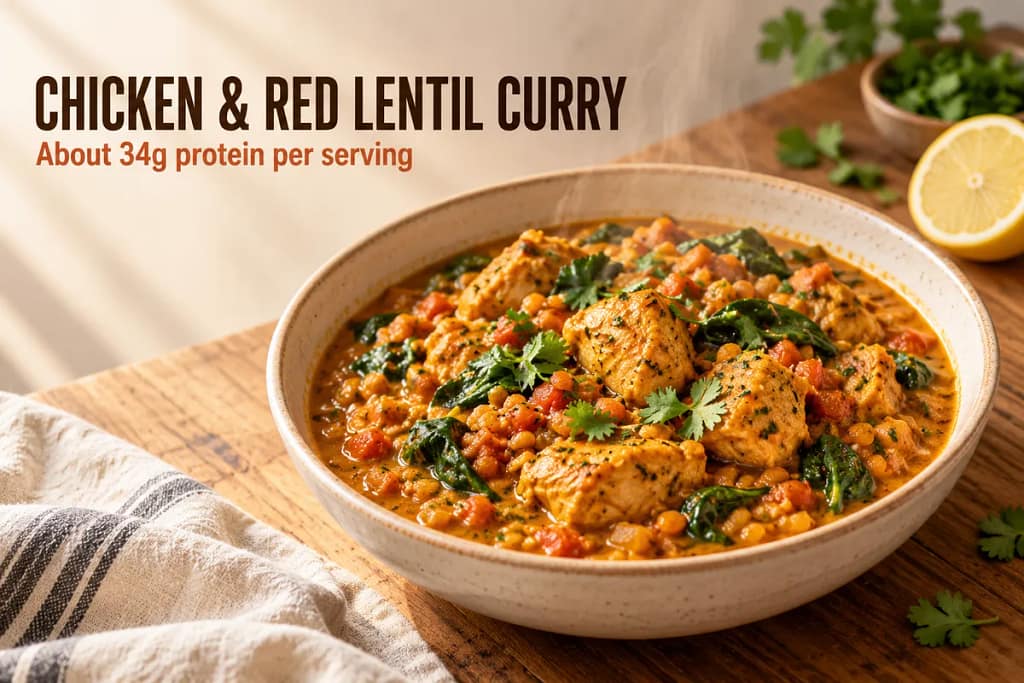
- 565 g (1¼ lb) boneless, skinless chicken thighs, thawed
- 95 g (½ cup) dry red lentils, rinsed
- 1 can or tin (400 g / 14 oz) diced tomatoes
- 1 can (400 ml / 13.5 to 14 oz) light coconut milk
- 120 ml (½ cup) low-sodium chicken broth
- 1 onion, diced; 2 cloves garlic, minced; 1 tbsp grated fresh ginger
- 2 tbsp mild curry powder
- To serve: a handful of baby spinach, lemon juice
Add the onion, garlic, ginger, lentils, tomatoes, broth and curry powder to the slow cooker and stir. Nestle the thighs into the sauce and pour the coconut milk over the top. Cook on HIGH for 1 hour, then LOW for 4 to 5 hours, until the chicken reaches 165°F (74°C) and the lentils are soft.
Break the chicken into chunks, stir in the spinach until it wilts, and finish with a squeeze of lemon. Thighs stay juicy even if dinner runs a little late.
Protein math: chicken thighs 112 g + red lentils 23 g = 135 g ÷ 4 = about 34 g per serving. Light coconut milk varies by brand, so calories may shift a little.
3. Balsamic Pork Tenderloin With Root Vegetables
About 30 g protein | about 280 calories per serving | Serves 4
Prep: 15 minutes | Cook: LOW 3 to 4 hours | Freezer-friendly: yes, sliced and covered in its juices | Serve with: a green salad or crusty bread
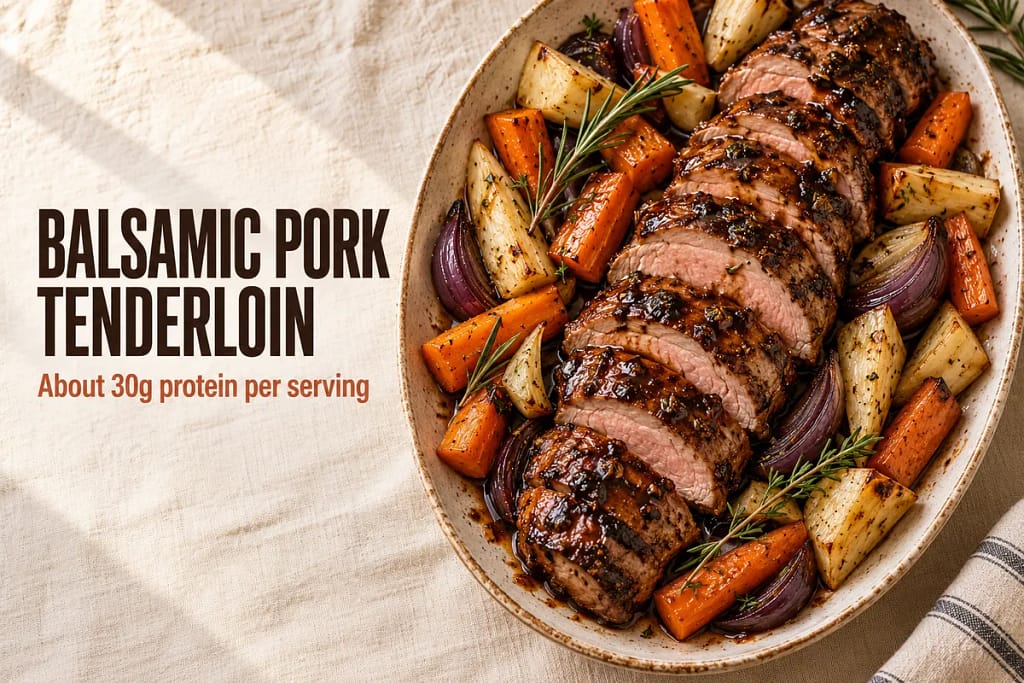
- 1 pork tenderloin, about 565 g (1¼ lb), thawed
- 450 g (1 lb) carrots and parsnips, cut into chunks
- 1 red onion, cut into wedges
- 60 ml (¼ cup) balsamic vinegar
- 2 tbsp honey, 1 tbsp Dijon mustard
- 2 cloves garlic, minced; 1 tsp dried rosemary
- Salt and pepper
Spread the vegetables across the bottom of the slow cooker. Mix the balsamic, honey, mustard, garlic and rosemary, season the pork with salt and pepper, and set it on the vegetables. Pour the glaze over the top. Cook on LOW for 3 to 4 hours, until the pork reaches 145°F (63°C), then let it rest for 3 minutes and slice.
To keep it juicy: tenderloin is lean, so start checking the temperature early and keep the lid on until you do. Extra hours in the pot dry it out, and every peek lets heat escape. More fixes for dry meat are in our slow cooker mistakes guide.
Protein math: pork tenderloin 118 g ÷ 4 = about 30 g per serving.
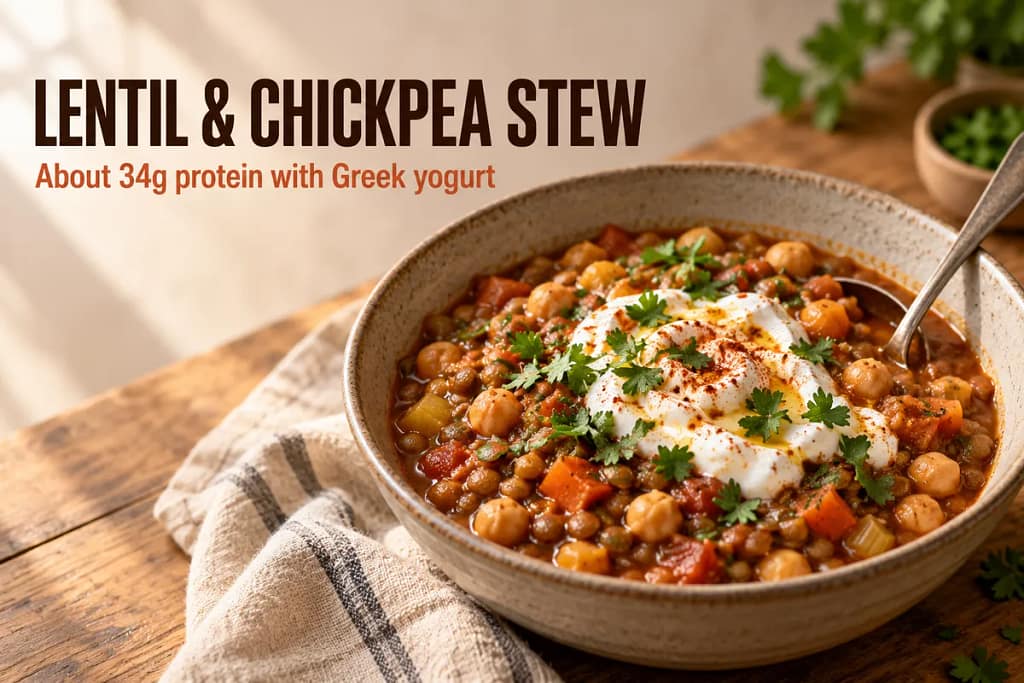
4. Hearty Lentil and Chickpea Stew (Vegetarian)
About 34 g protein with the yogurt topping (about 22 g without) | about 480 calories with yogurt, 410 without | Serves 4
Prep: 15 minutes | Cook: LOW 6 to 8 hours | Freezer-friendly: yes, add the yogurt after reheating | Serve with: crusty bread or a green salad
- 290 g (1½ cups) dry brown or green lentils, rinsed
- 1 can or tin (400 to 425 g / 14 to 15 oz) chickpeas, drained and rinsed
- 1 can or tin (400 g / 14 oz) crushed tomatoes
- 1 liter (4 cups) low-sodium vegetable broth
- 2 carrots and 2 celery stalks, diced; 1 onion, diced
- 2 cloves garlic, minced; 2 tsp smoked paprika; 1 tsp ground cumin
- To serve: 480 g (2 cups) plain nonfat Greek yogurt, fresh parsley
Put everything except the yogurt and parsley in the slow cooker and stir. Cook on LOW for 6 to 8 hours, until the lentils are tender. Add a splash of water if the stew gets too thick.
Top each bowl with a big dollop of Greek yogurt (about ½ cup or 120 g) and some parsley. It sounds like a lot, but it melts into the stew and turns it creamy, and it adds about 12 grams of protein to each bowl. This is also the recipe to choose if you’ll be out all day, because it’s happy with the full 8 hours.
Protein math: lentils 71 g + chickpeas 17 g = 88 g ÷ 4 = about 22 g per bowl, plus about 12 g from the yogurt = about 34 g per serving.
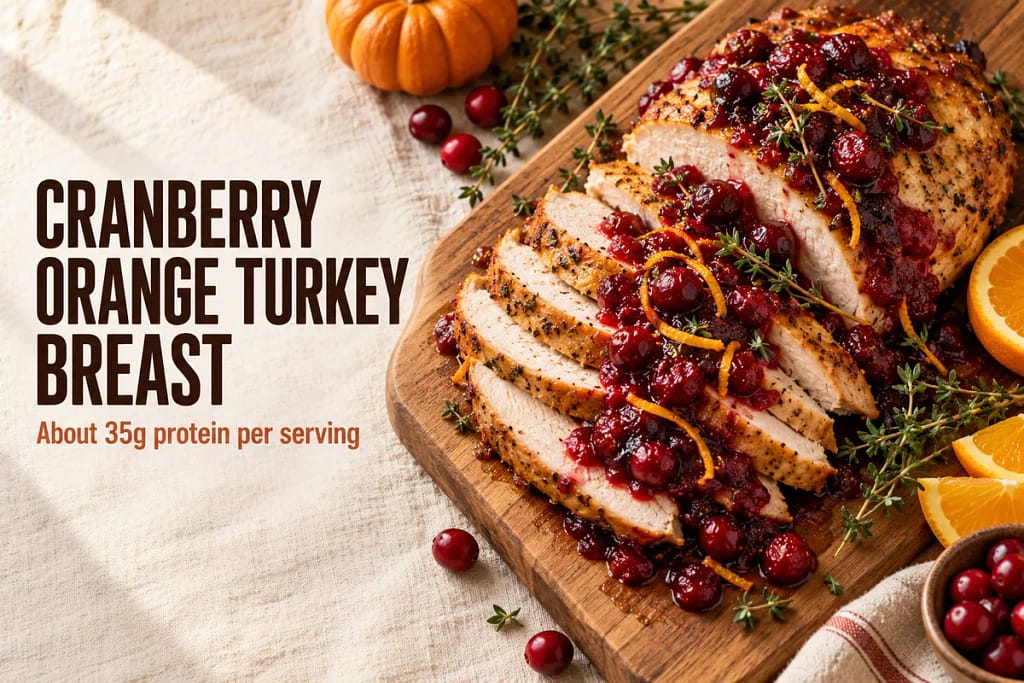
5. Cranberry Orange Turkey Breast
About 35 g protein | about 210 calories per serving | Serves 6
Prep: 10 minutes | Cook: HIGH 1 hour, then LOW 3 to 4 hours | Freezer-friendly: yes, sliced with the sauce | Serve with: green beans, mashed potatoes or a salad
- 900 g (2 lb) boneless, skinless turkey breast, thawed
- 100 g (1 cup) fresh or frozen cranberries (frozen fruit is fine)
- Zest and juice of 1 orange
- 2 tbsp maple syrup
- 1 onion, thickly sliced
- 1 tsp dried thyme, salt and pepper
Lay the onion slices in the slow cooker to make a rack. Season the turkey with thyme, salt and pepper and set it on top. Scatter the cranberries around it and pour the orange juice, zest and maple syrup over everything. Cook on HIGH for 1 hour, then LOW for 3 to 4 hours, until the thickest part reaches 165°F (74°C). Rest it for 10 minutes before slicing.
It’s a good pick for a smaller holiday table, and the leftovers make great sandwiches.
Protein math: turkey breast 211 g ÷ 6 = about 35 g per serving.
More slow cooker recipes for menopause
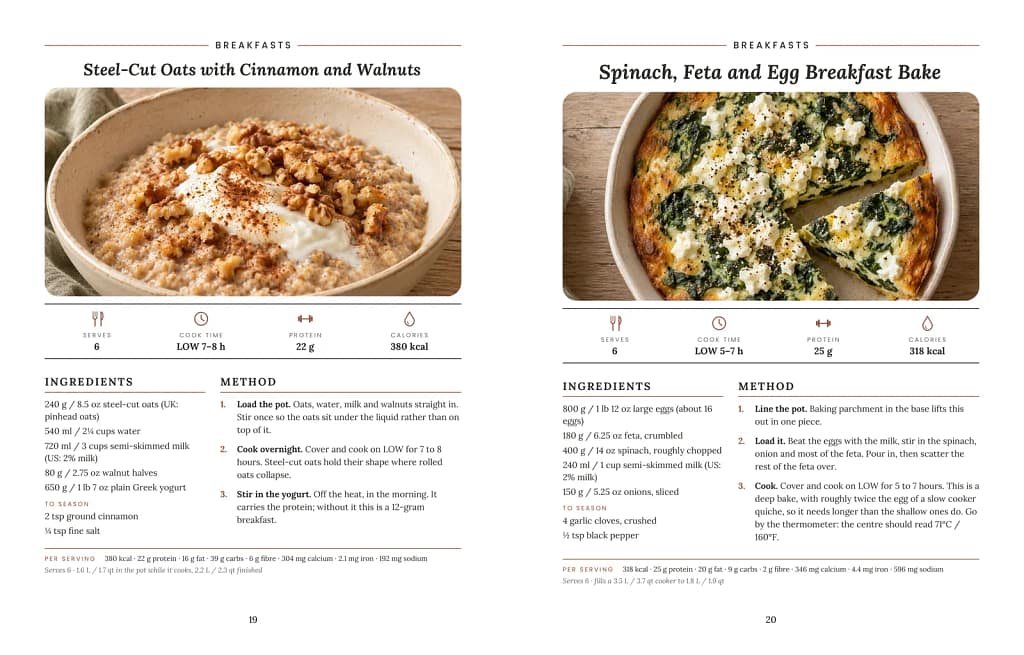
If these five sound like your kind of cooking, The Menopause High-Protein Slow Cooker Cookbook, our own Life Cookery book, has plenty more slow cooker recipes for menopause: 125 in all, each with a photo and nutrition information, plus a six-week meal plan for the days when deciding what to make feels like one job too many.
Prefer to cook once and eat three times? Our Sunday slow cooker meal prep plan turns one pot of smoky chicken into a rice bowl, a wrap and a baked potato.
See it on Amazon US | See it on Amazon UK
High protein dinners for women over 50, all week long
A few habits turn these high protein slow cooker recipes into a weekly routine:
- Cook once, eat twice. Pack a lunch portion before dinner hits the table.
- Freeze in single portions. All five recipes freeze. Thaw them in the fridge overnight and reheat to 165°F (74°C) on the stove or in the microwave.
- Cooking for one or two? A smaller cooker (about 2 to 3 liters or quarts) works best, because a slow cooker should be at least half full. With a big cooker, make the full batch and freeze the rest.
- Out all day? Choose the lentil stew, which needs 6 to 8 hours anyway, or the thigh curry, which forgives a little extra time. Don’t use a delay-start timer with raw meat. Clemson Extension advises keeping perishable food in the fridge until you start cooking.
- Spread it out. If dinner already brings 30 grams, look at breakfast next. Our 30g protein meals guide has ideas.
Slow cooker safety: the full list
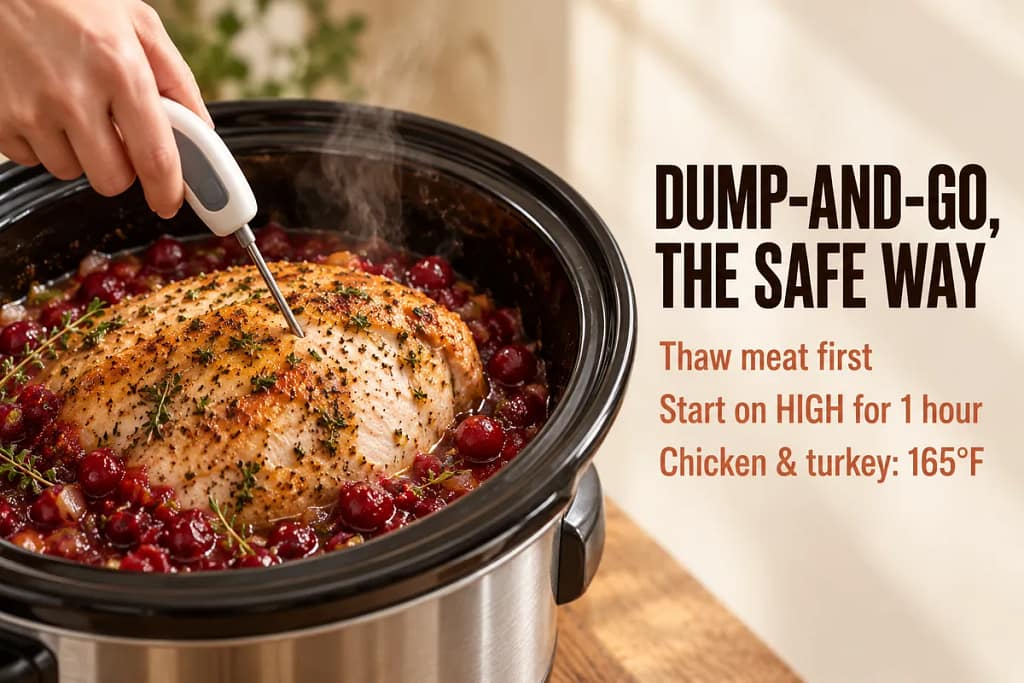
Beyond thawing and checking the temperature, the USDA’s slow cooker food safety advice and safe temperature chart add these habits:
- Vegetables go in first, at the bottom, because they cook more slowly than meat.
- Start on HIGH for the first hour if you can, then switch to LOW. Cooking on LOW the whole time is also safe.
- Keep the lid on except to stir or check doneness.
- If the power goes out while you’re away, throw the food out, even if it looks done.
- Don’t reheat leftovers in the slow cooker. Refrigerate them within 2 hours in shallow containers, then reheat to 165°F (74°C) on the stove or in the microwave.
What the research says about protein after menopause
Muscle and estrogen. Researchers think falling estrogen plays a part in muscle loss after menopause, though a 2024 review in Frontiers in Endocrinology notes the exact mechanism is still unclear.
How much protein. The standard minimum for adults is 0.8 grams per kilogram of body weight a day. A 2024 review in Physiologia concluded that postmenopausal women should get at least that much, and said the research in this group is limited and not high quality. An editorial in Nutrients (2024) cites 1.1 to 1.5 g/kg a day for postmenopausal women. Australia’s CSIRO uses 1.2 g/kg in a September 2026 release and estimates that Australian women aged 40 to 55 fall about 35 grams a day short. That comes from a press release, not a peer-reviewed paper.
For a woman who weighs 68 kg (150 lb), 0.8 g/kg works out to about 54 grams a day, and 1.1 to 1.5 g/kg to roughly 75 to 102 grams.
Why “about 30 grams per meal”. A small 2014 study in The Journal of Nutrition found that when eight healthy adults ate about 30 grams at each of three meals, their muscles made new protein about 25% faster over 24 hours than when most protein came at dinner. The volunteers averaged 37 years old, only three were women, and beef industry money supported the work. So treat 30 grams as a practical starting point.
Protein plus movement. In a 2019 trial in Nutrients, 47 postmenopausal women did 10 weeks of strength training with either about 0.8 or about 1.2 g/kg of protein a day. Both groups gained muscle and strength, and the higher-protein group improved slightly more on walking tests. Strength training does the heavy lifting (sorry), and protein backs it up.
Before you change how much protein you eat
- Kidney disease: if you have chronic kidney disease, talk to your doctor or a kidney dietitian before you raise your protein. The National Kidney Foundation explains that people with kidney disease who aren’t on dialysis usually need less protein, and your care team will use your kidney function results (such as eGFR) to set your amount.
- Salt and blood pressure: salsa, broth and canned beans can add a lot of sodium. If you watch your blood pressure, choose low-sodium versions and rinse the beans.
- Medications and medical conditions: if you take medication for diabetes or follow a diet your doctor prescribed, ask before you make big changes to how you eat.
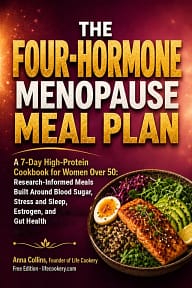
Free: The Four-Hormone Menopause Meal Plan
Seven days of easy high-protein meals for perimenopause and beyond: 21 recipes plus a simple swap guide, sent straight to your inbox.
Get the free 7-day planFrequently asked questions
Can I put frozen chicken straight into the slow cooker?
No. The USDA advises you to thaw meat and poultry before it goes in, because frozen raw meat can spend too long at temperatures where bacteria grow. Move it to the fridge the night before. Frozen fruit and vegetables, like the cranberries in recipe 5, are fine.
How much prep do these recipes really take?
About 10 to 15 minutes each. Most of that is slicing an onion or chopping root vegetables. The rest is opening cans and measuring spices.
Can I leave a slow cooker on while I’m out?
Yes, if you start with thawed food. For a long day, the lentil stew (6 to 8 hours) is the best fit. If the power goes out while you’re away, the USDA says to throw the food out, even if it looks done.
Do I need to brown the meat first?
Not for these five recipes. They use whole cuts, and the slow cooker cooks them through as long as they reach a safe temperature. Browning adds flavor, so do it if you have an extra ten minutes.
How much protein does a woman need after menopause?
The standard minimum is 0.8 grams per kilogram of body weight a day. Some researchers suggest 1.1 to 1.5 g/kg for women after menopause, though the research in this group is still limited. Your own needs depend on your size, activity and health.
Can I freeze these high protein slow cooker recipes?
Yes, all five. Freeze single portions in airtight containers, thaw them in the fridge overnight and reheat to 165°F (74°C). Add the Greek yogurt to the lentil stew after reheating.
Can I make these recipes vegetarian or dairy-free?
Recipe 4 is vegetarian. Without the yogurt it gives about 22 grams of protein per bowl, so if you skip dairy, add a protein-rich side that day. The meat recipes don’t use dairy at all.
Is a high-protein diet safe if I have kidney disease?
Talk to your doctor or a kidney dietitian first. People with chronic kidney disease who aren’t on dialysis usually need less protein, and your care team will look at your kidney function results to set the right amount for you.
A note from Anna
You don’t need to cook all five this week. Pick the one that sounds best on a tired Tuesday, and let the slow cooker handle the rest. If you’d like a whole shelf of options, the cookbook is on Amazon (UK store here).
With you in the kitchen,
Anna
Medical disclaimer
This article is for general information and education. It isn’t medical advice, and it doesn’t replace advice from your doctor, a registered dietitian or another health professional who knows your history. The author is not a doctor or dietitian. Talk to your healthcare team before you make big changes to how you eat, especially if you have kidney disease, diabetes, high blood pressure or another medical condition, or if you take prescription medication.
Disclosure
The Menopause High-Protein Slow Cooker Cookbook is a Life Cookery book by Anna Collins, the author of this post, and we earn royalties when you buy it. The Amazon links on this page are not affiliate links. Some of them include tracking that shows us which posts sent readers to Amazon, and none of them change the price you pay.
Sources
- Zhang C et al. Research progress on the correlation between estrogen and estrogen receptor on postmenopausal sarcopenia. Frontiers in Endocrinology, 2024. Read it
- Black KE, Matkin-Hussey P. The Impact of Protein in Post-Menopausal Women on Muscle Mass and Strength: A Narrative Review. Physiologia, 2024. Read it
- Cortes TM, Serra MC. Dietary Strategies in Postmenopausal Women with Chronic and Metabolic Diseases. Nutrients, 2024 (editorial). Read it
- CSIRO. The protein gap: CSIRO highlights the importance of protein during menopause. News release, September 2026. Read it
- Mamerow MM et al. Dietary Protein Distribution Positively Influences 24-h Muscle Protein Synthesis in Healthy Adults. The Journal of Nutrition, 2014. Read it
- Nahas PC et al. Moderate Increase in Protein Intake Promotes a Small Additional Improvement in Functional Capacity in Postmenopausal Women Following Resistance Exercise. Nutrients, 2019. Read it
- USDA Food Safety and Inspection Service. Slow Cookers and Food Safety. Read it
- USDA Food Safety and Inspection Service. Safe Minimum Internal Temperature Chart. Read it
- National Kidney Foundation. CKD Diet: How much protein is the right amount? Read it
- Clemson Cooperative Extension. Slow Cooker Food Safety (HGIC 3585). Read it
- USDA FoodData Central, protein and calories per 100 g: chicken breast (FDC 2646170), chicken thigh (173627), pork tenderloin (168249), turkey breast (174515), lentils (172420), red lentils (174284), pinto beans canned (173797), chickpeas canned (173800), nonfat Greek yogurt (170894), salsa verde (171824), onion (170000), carrots (170393), parsnips (170417), celery (169988), canned diced tomatoes (170051), crushed tomatoes (170501), reduced-sodium chicken broth (172888), vegetable broth (171583), cranberries (171722), orange juice (169098), maple syrup (169661), honey (169640), balsamic vinegar (172241), yellow mustard (172234); light coconut milk from USDA branded data (Thai Kitchen Lite, FDC 2419741).