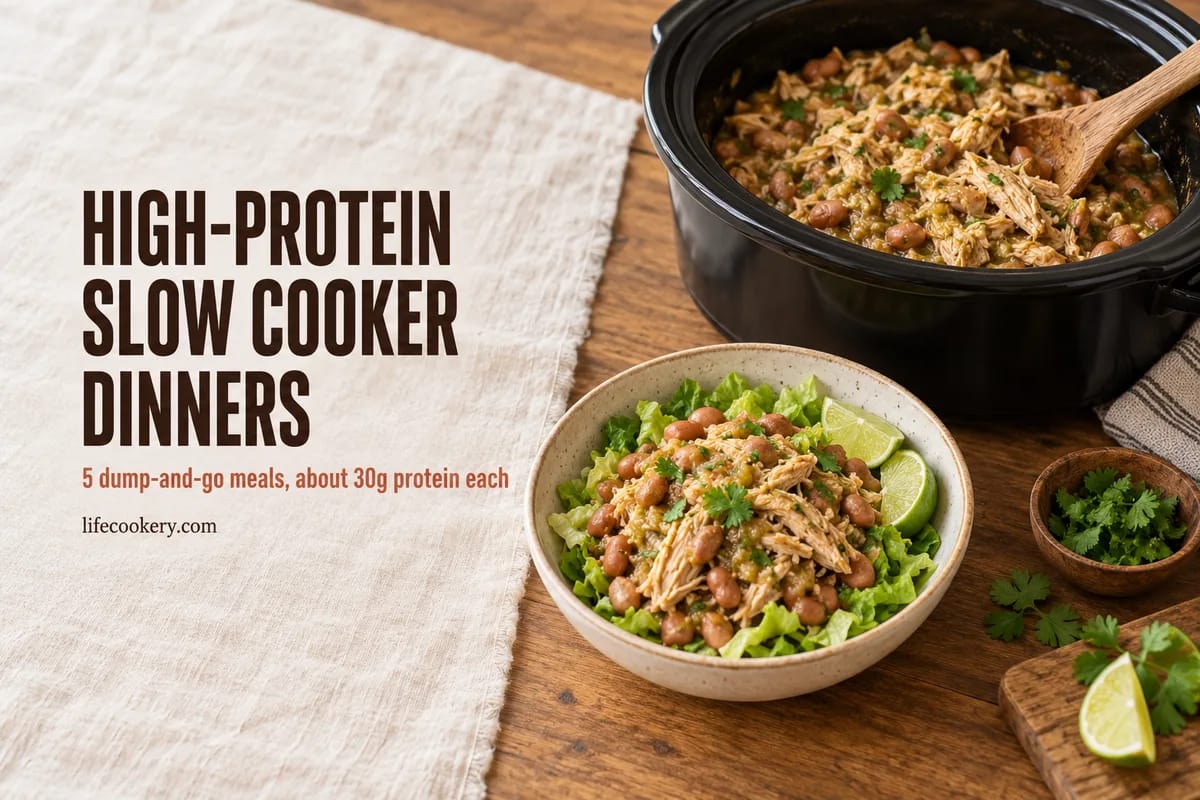

You followed the recipe. You came home to a kitchen that smelled wonderful. Then you lifted out a chicken breast with the texture of a kitchen sponge.
Often the recipe isn’t the problem. A handful of small slow cooker mistakes leave chicken dry, sauce watery and carrots hard, and each one has an easy fix. Three of them can also make food unsafe, so they get their own section below.
4 mistakes that make slow cooker chicken breast dry
Dry chicken usually comes down to four habits.
1. Using chicken breast for an all-day cook
Chicken breast is lean, which is lovely for a quick dinner but not ideal for eight hours in a slow cooker. Boneless thighs carry a little more fat, so they stay tender when the cooker runs long, and they shred beautifully into sauces.
The fix: choose boneless, skinless thighs for long slow cooker recipes. If you prefer breast, use a shorter cook and start checking it early with a food thermometer. If a recipe says “8 hours on LOW” and lists chicken breast, swap in thighs.
2. Cooking by the clock instead of a thermometer
Slow cookers vary a lot from model to model, so a recipe time is the writer’s best guess about their cooker.
The fix: check with an instant-read food thermometer in the thickest piece. The USDA safe minimum for chicken and turkey is 165°F (74°C). Once it gets there, serve it, or switch the cooker to WARM, which should hold food at 140°F (60°C) or above.
3. Lifting the lid too often
It’s tempting to lift the lid when dinner smells wonderful. But every peek lets heat escape, and the pot needs time to warm back up. Clemson Cooperative Extension notes that the temperature drops 10 to 15°F (about 6 to 8°C) each time the lid comes off.
The fix: leave the lid in place until you’re ready to check for doneness. If you’re curious, look through the glass, and give the lid a gentle spin if condensation is in the way. A little patience makes slow cooking much easier.
4. Filling the pot too little
A small batch in a big pot cooks faster than the recipe expects. Clemson and Colorado State University Extension both say to fill the cooker at least half full and no more than two-thirds full.
The fix: if you cook for one or two, a smaller cooker (around 2 to 3 quarts) makes this much easier. With a large cooker, double the recipe and freeze the extra in single portions.
Already have dry chicken? Try this
Don’t throw dinner away just yet. Shred the chicken with two forks, stir in a little warm broth or sauce and let it sit for about 10 minutes before serving.
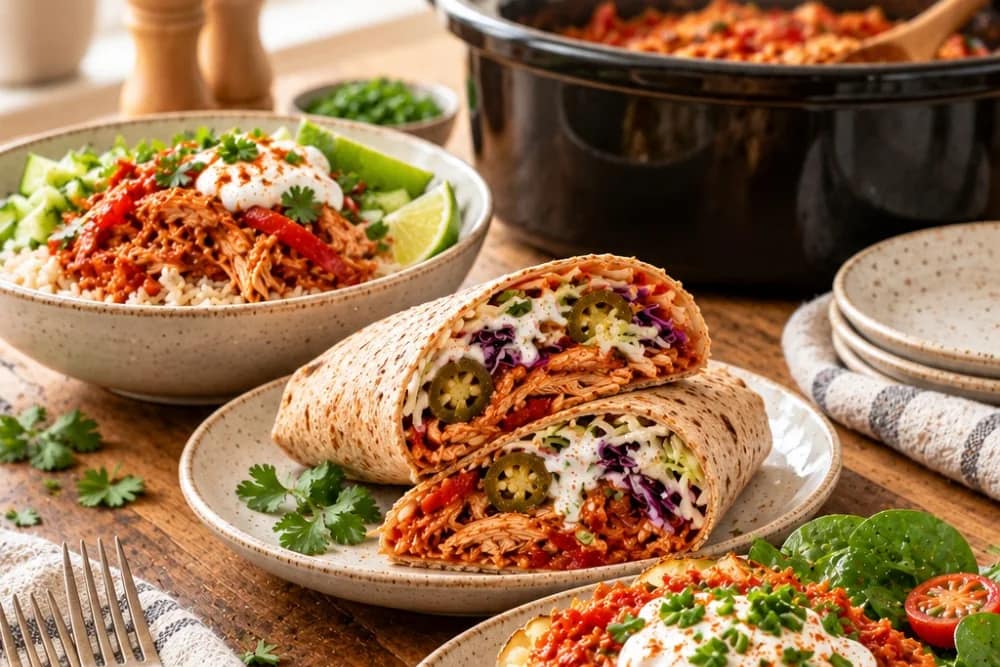
It won’t turn overcooked chicken back into perfectly juicy meat, but it makes it much more pleasant to eat. Pile it into tacos, wraps or a rice bowl with plenty of sauce.

Want more slow cooker dinners to try? The Menopause High-Protein Slow Cooker Cookbook, our own Life Cookery book, has 125 dump-and-go recipes with a photo and nutrition for each, plus a 6-week meal plan. See it on Amazon US or Amazon UK.
Not ready to buy yet? Start with the free 7-day high-protein meal plan.
4 slow cooker mistakes that leave dinner watery or bland
Watery, bland sauce has its own causes. These slow cooker mistakes come from treating the pot like a stovetop pan.
5. Adding too much liquid
Unlike a pan on the stove, your slow cooker keeps most of the moisture inside, so a sauce that looks perfect at the start can turn watery by dinnertime. Utah State University Extension suggests cutting the liquid by about one-third to one-half when you adapt a regular recipe (soups and rice dishes excepted).
The fix: follow a recipe written for the slow cooker. If you’re adapting a stovetop recipe, start with less liquid and add a splash later if you need it. If the sauce is still thin at the end, ladle some into a saucepan and simmer it until it thickens.
6. Adding dairy at the start
Milk, cream and sour cream tend to break down and curdle over a long cook, according to Utah State and Missouri Extension.
The fix: stir in dairy during the last hour, or right before serving. Greek yogurt goes on at the table.
7. Putting the vegetables on top
Root vegetables like carrots and potatoes cook more slowly than meat. The USDA and Missouri Extension both recommend putting them at the bottom, closest to the heat.
The fix: vegetables go in first, meat on top, sauce over everything.
8. Adding all the herbs and hot sauce at the beginning
Missouri Extension notes that ground herbs and spices lose flavor over a long cook, and cayenne or hot sauce can turn bitter.
The fix: use dried herbs for the long cook, then add fresh herbs, a squeeze of lemon or lime, and any heat in the last few minutes. That final hit of acid wakes up a sauce that tastes flat.
Slow cooker food safety: 3 mistakes that make food unsafe
These three matter more than any texture problem, because they can make someone sick. They matter even more if you cook for adults 65 and older or anyone with a weakened immune system, groups the CDC lists as being at higher risk of food poisoning.
9. Putting frozen meat straight into the slow cooker
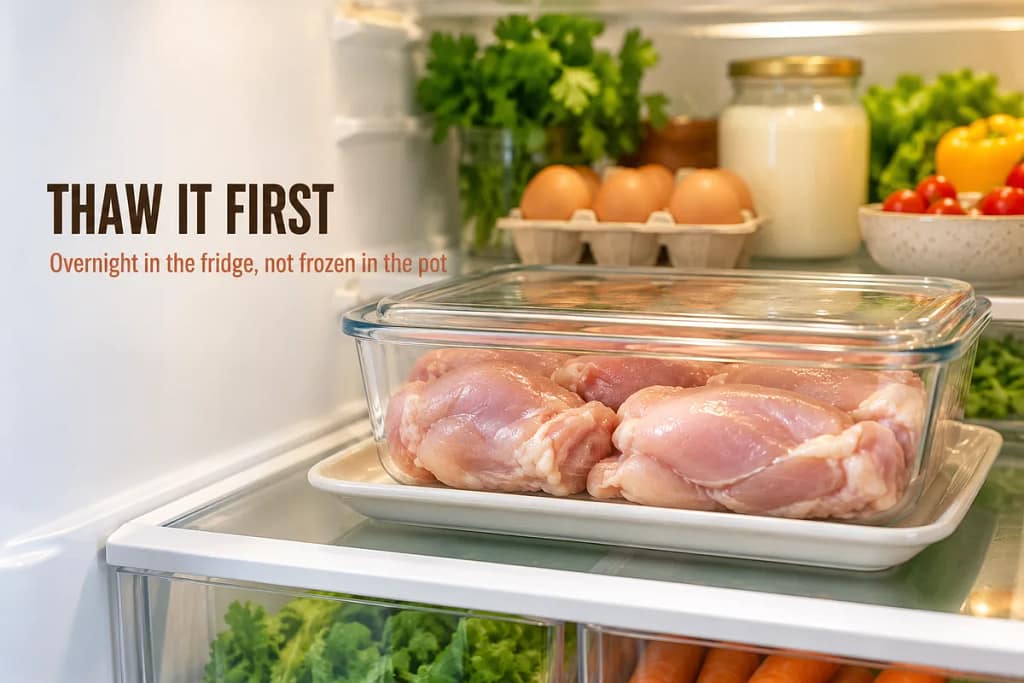
Frozen meat can spend too long at temperatures where bacteria grow while it thaws in the pot. The USDA, Clemson, Utah State and Colorado State all give the same advice: thaw meat and poultry completely first.
The fix: move the meat to the fridge the night before. Starting on HIGH for the first hour helps the food heat up quickly, but the USDA says cooking on LOW the whole time is also safe. Frozen vegetables and fruit are fine.
10. Cooking dried red kidney beans from raw
Raw kidney beans contain a natural toxin called phytohaemagglutinin (PHA). Illinois Extension explains that boiling at 212°F (100°C) for at least 10 minutes destroys it, but beans in a slow cooker often reach only about 167°F (75°C). Slow heating may even make the beans more toxic.
As few as four undercooked kidney beans can cause nausea, vomiting, stomach pain and diarrhea. White cannellini beans contain less PHA, but the same rule applies to them.
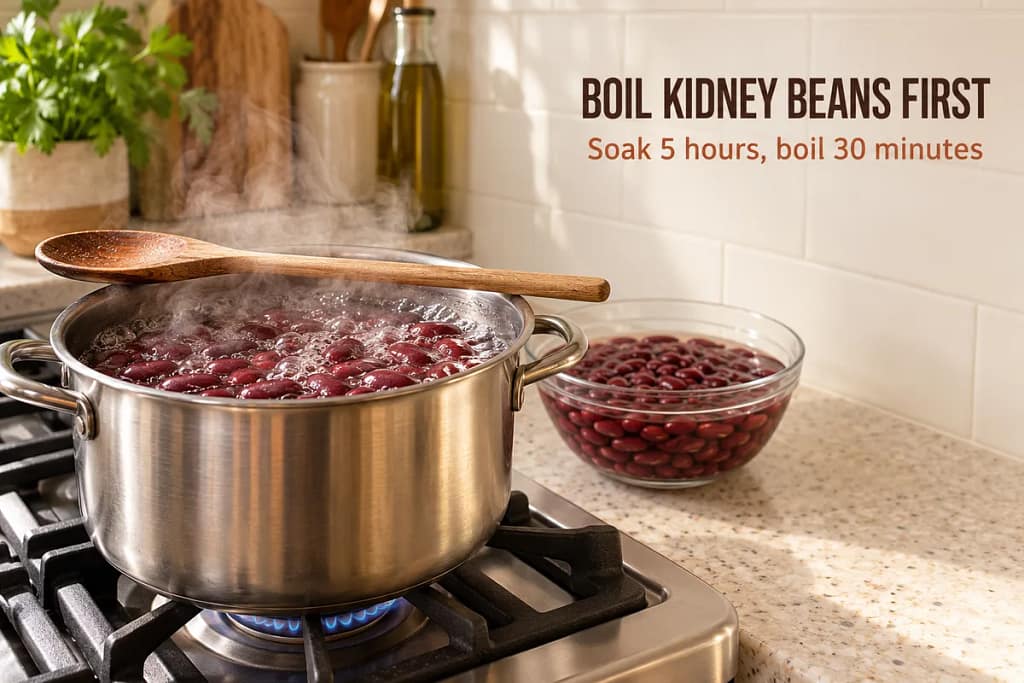
The fix: use canned kidney beans, which are already cooked. If you start from dried, soak them for at least 5 hours, drain, then boil them briskly in fresh water for 30 minutes before they go into the slow cooker.
11. Leaving food on WARM too long, or reheating leftovers in the pot
The WARM setting is for holding food that is already hot, not for cooling it down slowly. Colorado State says food on WARM should stay at 140°F (60°C) or above.
The fix: refrigerate leftovers in shallow containers within 2 hours. Reheat them to 165°F (74°C) on the stove or in the microwave, and only then move them to a preheated slow cooker to keep warm.
One more rule from the USDA: if the power goes out while you’re away, throw the food out, even if it looks done.
Easy slow cooker shredded chicken
Tender, juicy chicken for tacos, wraps, salads and easy lunches. This base recipe avoids every mistake above.
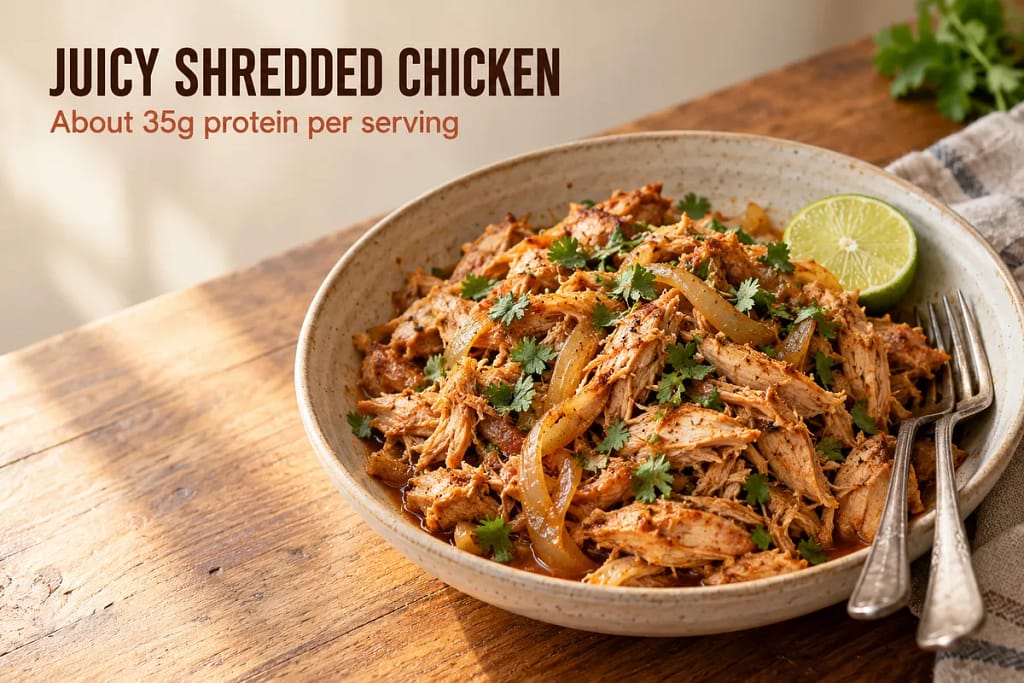
Serves 4 | About 35 g protein and 225 calories per serving
Prep: 10 minutes | Cook: HIGH 1 hour, then LOW 3 to 4 hours | Slow cooker: 2 to 3 quarts | Freezer-friendly: yes, in its juices
- 1½ lb (680 g) boneless, skinless chicken thighs, thawed
- 1 medium onion, sliced
- 1 cup (240 ml) reduced-sodium chicken broth
- 2 cloves garlic, minced
- 1 tsp smoked paprika, 1 tsp dried oregano, ½ tsp salt
- To finish: juice of 1 lime, a handful of chopped parsley or cilantro
- Spread the onion across the bottom of the slow cooker.
- Rub the thighs with garlic, paprika, oregano and salt, and lay them on the onion.
- Pour the broth around the chicken so it comes most of the way up the sides.
- Cook on HIGH for 1 hour, then LOW for 3 to 4 hours, until the thickest piece reaches 165°F (74°C). Keep the lid on until then.
- Shred the chicken with two forks right in the pot, stir it through the juices and let it sit for 10 minutes so it soaks up the liquid.
- Finish with lime juice and fresh herbs.
Cooking for one or two? This batch is the right size for a small 2- to 3-quart cooker, so eat two portions and freeze two. Halving it in a large cooker would leave the pot less than half full, which is mistake number 4.
A note on salt and protein: broth and jarred sauces can add a lot of sodium, so choose reduced-sodium versions if you watch your blood pressure. If you have kidney disease, ask your doctor or a kidney dietitian how much protein is right for you.
For more dinners built this way, see our high protein slow cooker dinners for menopause, each with about 30 grams of protein. Our 30g protein meals guide covers breakfast and lunch.
Before you press start: a 60-second checklist

- Meat is fully thawed.
- Vegetables are at the bottom, meat on top.
- The pot is between half and two-thirds full.
- Liquid comes most of the way up the meat.
- Dairy and fresh herbs wait until the end.
- You know where your food thermometer is.
- Leftovers go into the fridge within 2 hours.
Is your slow cooker still hot enough? Colorado State suggests a simple test. Fill the pot half to two-thirds with tap water, cover it and heat on LOW for 8 hours, then check the water with a thermometer. It should read 185 to 200°F (85 to 93°C). Below 185°F, it’s time for a new cooker. Handle the hot water carefully.
Ready to put these fixes to work? Our Sunday slow cooker meal prep plan uses chicken thighs, a measured amount of sauce and a thermometer check, then turns one pot into three different dinners.
Love your slow cooker but tired of guessing what to make?
Once you know how to dodge these mistakes, slow cooking gets a lot easier. If you’d like more dinner ideas, The Menopause High-Protein Slow Cooker Cookbook, our own Life Cookery book, brings together 125 easy recipes, each with a photo and nutrition information, plus a 6-week meal plan. It takes some of the daily guesswork out of getting dinner on the table, especially when you’re trying to fit more protein into your meals.
Take a look inside: see it on Amazon US | Amazon UK
Frequently asked questions
What are the most common slow cooker mistakes?
The big ones are cooking lean chicken breast for too long, going by the clock instead of a thermometer, lifting the lid and filling the pot less than half full. For safety, the three slow cooker mistakes to avoid are adding frozen meat, cooking dried red kidney beans from raw, and leaving food on WARM too long or reheating leftovers in the pot.
Can I put frozen chicken in a slow cooker?
No. The USDA advises thawing meat and poultry completely before it goes in, because frozen meat can spend too long at temperatures where bacteria grow. Thaw it in the fridge overnight. Frozen vegetables and fruit are fine.
Why is my slow cooker chicken breast dry?
Usually because it cooked well past done. Breast is very lean, and slow cooker times vary between models. Check the thickest piece with a thermometer, stop at 165°F (74°C), or switch to boneless thighs for long cooks.
How full should a slow cooker be?
Between half and two-thirds full. Missouri Extension notes that an underfilled cooker overcooks food and an overfilled one can’t regulate its heat properly.
Is it safe to leave a slow cooker on while I’m at work?
Generally yes, if your slow cooker is in good working order and you use it the way the manufacturer directs: start with thawed food, fill the pot half to two-thirds full and follow a recipe written for the slow cooker. If the power goes out while you’re away, the USDA says to throw the food out, even if it looks done.
Medical disclaimer
This article is for general information and education. It isn’t medical or food safety advice for your specific situation, and it doesn’t replace advice from your doctor, a registered dietitian or another health professional who knows your history. The author is not a doctor or dietitian. Talk to your healthcare team before you make big changes to how you eat, especially if you have kidney disease, diabetes, high blood pressure or another medical condition, or if you take prescription medication.
Disclosure
The Menopause High-Protein Slow Cooker Cookbook is a Life Cookery book by Anna Collins, the author of this post, and we earn royalties when you buy it. The Amazon links on this page are not affiliate links. Some of them include tracking that shows us which posts sent readers to Amazon, and none of them change the price you pay.
Sources
- USDA Food Safety and Inspection Service. Slow Cookers and Food Safety. Read it
- USDA Food Safety and Inspection Service. Safe Minimum Internal Temperature Chart. Read it
- Hoyle EH. Slow Cooker Food Safety (HGIC 3585). Clemson Cooperative Extension, updated 2022. Read it
- Colorado State University Extension, Food Smart Colorado. Crockpot and Slow Cooker Food Safety. Read it
- University of Missouri Extension. Slow cooker tips for tasty meals. Read it
- Utah State University Extension. Simple Slow Cooking. Read it
- Peterson L. Kidney Beans and Slow Cookers. Illinois Extension, February 2024. Read it
- Centers for Disease Control and Prevention. People at Increased Risk for Food Poisoning, 2025. Read it
- USDA FoodData Central: chicken thigh meat only, raw (FDC 173627); chicken breast boneless skinless, raw (FDC 2646170); onions, raw (FDC 170000); chicken broth, reduced sodium, ready to serve (FDC 172888).
How we counted: nutrition for the shredded chicken comes from USDA FoodData Central values for the raw ingredients listed above (chicken thighs, onion and reduced-sodium broth), divided by 4 servings.