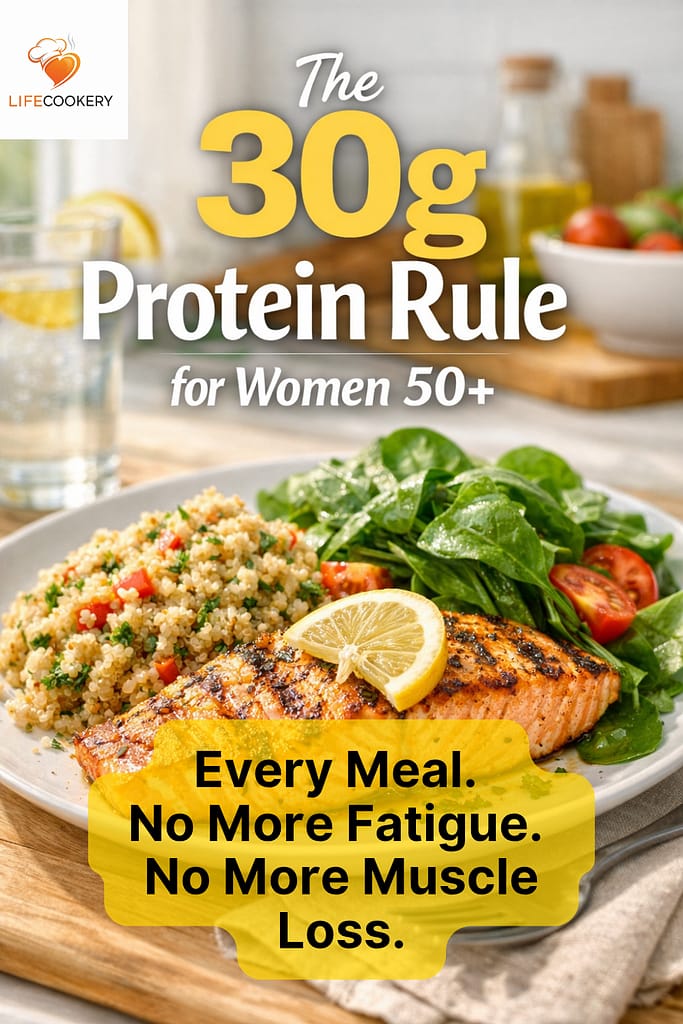
Let’s be honest for a second. Have you ever walked into your kitchen, stared at the fridge, and realized you’ve completely forgotten why you’re there? Or maybe you’ve noticed that despite hitting the gym and eating “light,” your favorite jeans are feeling a little… snug around the middle? Trust me, I’ve been there. We’ve all been there. I’m Anna Collins, and if you’re reading this at 2 a.m. because a hot flash decided to throw a party in your bedroom, I see you. Transitioning through menopause feels a bit like your body has staged a sudden, frustrating coup. But here’s the thing: we aren’t broken. We’re just changing. And one of the most powerful ways to take the remote control back from our hormones is through 30g Protein Meals. Why 30 grams? Because after 50, our muscles become a bit “deaf” to protein, and we need a louder signal to keep our metabolism humming.
The Science of Why “Eating Less” is Failing Us
Frankly, no one really warned us that the old “eat less, move more” advice would eventually backfire. In our 20s, skipping lunch meant losing a pound. In our 50s, skipping lunch just makes us tired, cranky, and surprisingly softer.
Recent studies, specifically a 2025 survey study on caloric and protein intake, show that during the menopause transition, many of us are drastically under-eating. We’re consuming fewer calories and way less protein than our muscles actually need. IMO, this is the biggest mistake we can make. When we under-eat protein, our bodies go looking for it elsewhere – usually by breaking down our own muscle tissue.
This leads to a nasty domino effect:
- Slower Metabolism: Less muscle means your body burns fewer calories while you’re just sitting there reading this.
- The “Sacred” Belly Fat: Without enough protein to stabilize blood sugar, insulin spikes, and the weight settles right on the midsection.
- Loss of Strength: Suddenly, carrying the groceries feels like a HIIT workout. :/
How 30g Protein Meals Trigger Muscle Protein Synthesis
Ever wondered why you can’t just have a tiny yogurt and call it a day? It’s because of something called Muscle Protein Synthesis (MPS). Think of MPS as a light switch for your muscles. When we were 25, that switch was sensitive; a little bit of protein could flip it on.
After 50, we develop what researchers call “anabolic resistance.” The switch gets stuck. To flip it, we need a “threshold” dose of leucine (an amino acid found in protein). For most of us, that magic number starts at 30g Protein Meals. If you only eat 10g or 15g, the switch stays off. You’re eating the calories, but your muscles aren’t getting the building blocks. It’s like sending a construction crew to a site without any bricks. They’re just sitting around getting paid (in calories), but nothing is being built!
Pro tip: If the thought of calculating protein grams makes your head spin, don’t worry – I’ve done the math for you. Meet Your New Secret Weapon: The Menopause Weight Loss Reset Cookbook. It’s packed with simple, 30g+ protein recipes that take the guesswork out of your kitchen.
The Fish and Soy Factor: More Than Just Muscle
I stumbled upon a fascinating study in PubMed (2025) that examined how protein-rich foods affect our actual menopausal symptoms. It turns out, what we eat doesn’t just change our biceps; it changes our hot flashes too.
Here’s the juicy part of the research:
- Fish is King: Women who frequently consumed fish tended to have a later natural menopause and – wait for it – milder symptoms.
- The Dairy & Soy Connection: Regular intake of yogurt, kefir, and tofu was linked to better sleep and less “psychological crumble” (you know, those days where everything feels like a disaster?).
- The Supplement Trap: Interestingly, the study found that popping calcium or iron pills didn’t help much, and sometimes made women feel worse. The real magic is on the plate, not in the pill bottle.
Why 30g Protein Meals Beat Traditional Low-Fat Diets
Stop Fighting Your Body: The New Macro Rules
The Women’s Health Initiative (WHI), which has tracked over 160,000 of us, recently dropped some truth bombs. They confirmed that a low-fat diet full of fruits and veggies is “fine,” but it won’t save your muscles or your bones. To thrive, we need to aim for 1.4g to 2.0g of protein per kilogram (about 0.7g to 0.9g per pound) of body weight.
Does that sound like a lot? It might. But remember: we aren’t trying to eat like bodybuilders. We’re trying to eat like women who want to keep their independence, their strength, and their sanity.
How to Build Your 30g Protein Meals Without the Stress
If you’re wondering how to actually hit that threshold, here are a few simple, tried-and-true ways to make your 30g Protein Meals happen👇:
- Don’t be afraid of “honest” portions: A tiny piece of salmon isn’t enough. Aim for a piece the size of your whole hand.
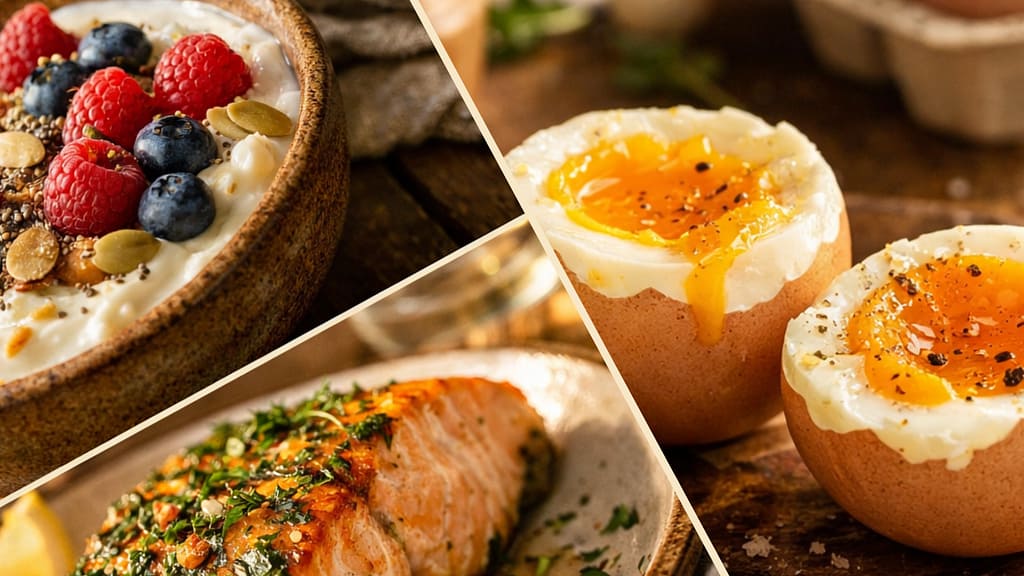
- Prioritize the “Big Three”: Fish, Greek yogurt, and soy/tofu are your best friends for hormone balance.
- The Swap Method: Stop trying to add more food. Instead, replace refined carbs (looking at you, white toast) with protein-rich alternatives.
- The Resistance Stimulus: Protein provides the bricks, but you still need the “work order.” Pair your 30g Protein Meals with some form of resistance training to tell those muscles to stay put.
Protein and the “Midnight Sun” (Better Sleep)
To be honest, I didn’t expect this part: protein might help you sleep. Preliminary research from Dr. Baum suggests that protein supplementation in postmenopausal women can improve subjective sleep quality.
Why? Because protein helps stabilize blood sugar throughout the night. If you’ve ever woken up at 3 a.m. with your heart racing, that might be a blood sugar crash. Having a high-protein dinner – hitting that 30g Protein Meals mark – acts like a slow-burning log on a fire, keeping your energy steady while you dream.
Easy Ways to Plan Your 30g Protein Meals Every Day
I know what you’re thinking. “Anna, I don’t have time to count every gram!” I get it. I’m a cook, not a mathematician. We want simple, comforting meals that don’t feel like a chore.
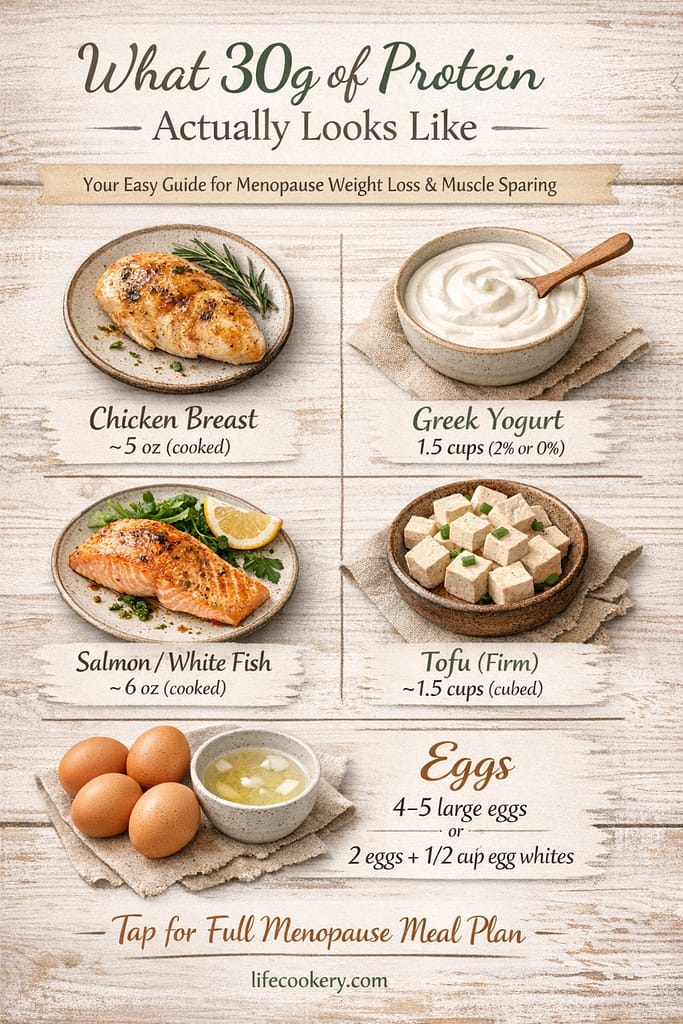
Here is a quick cheat sheet to hit that 30g mark:
| Food Source | Portion Size for ~30g Protein |
| Chicken Breast | ~5 oz (cooked) |
| Greek Yogurt | 1.5 cups (standard 2% or 0%) |
| Salmon / White Fish | ~6 oz (cooked) |
| Tofu (Firm) | ~1.5 cups (cubed) |
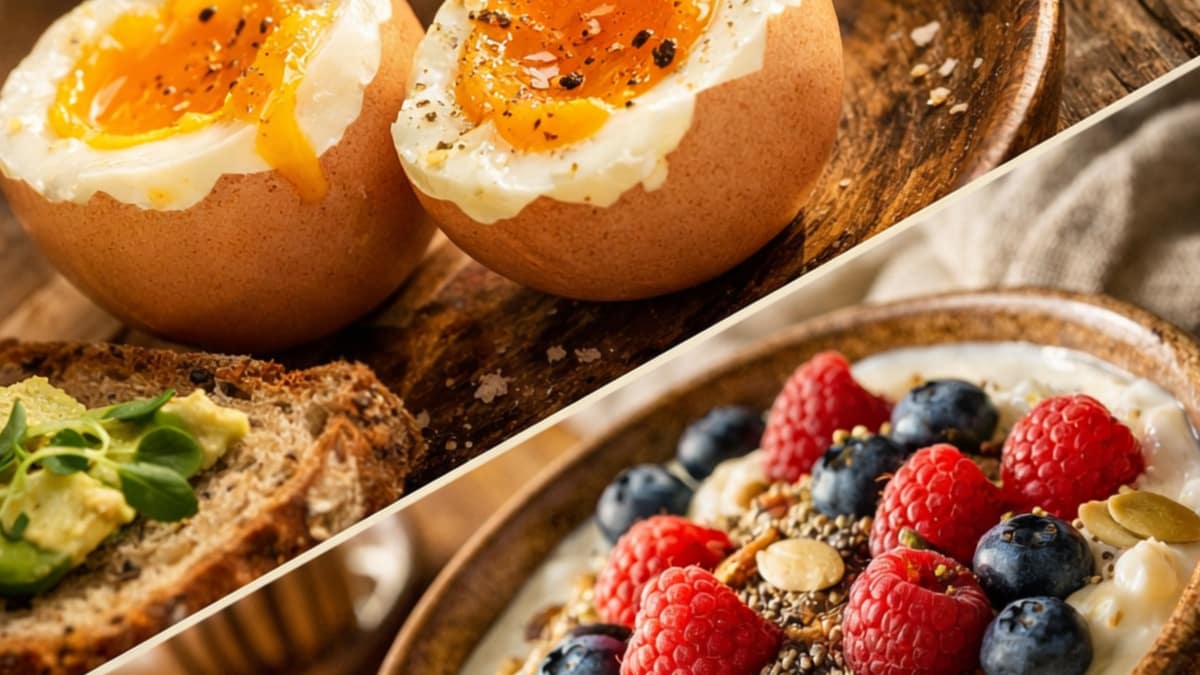
| Eggs | 4-5 large eggs (or 2 eggs + 1/2 cup egg whites) |
FYI: If you’re struggling to hit the target, high-quality whey or soy protein powder is a perfectly acceptable “shortcut.” I use it in my Hormone Smoothies all the time when I’m running out the door. 🙂
We’re Figuring This Out Together
This season of life is different – not worse. It’s a time to stop “dieting” and start nourishing. Transitioning to a lifestyle focused on 30g Protein Meals isn’t about perfectionism or looking like a fitness model. It’s about having the energy to play with your grandkids, the strength to travel, and a metabolism that doesn’t quit on you the moment you look at a piece of cake.
Be gentle with yourself. You don’t have to fix your entire pantry today. Just start with your next meal. Can you add an extra egg? A side of cottage cheese? A piece of salmon?
And if you want a complete roadmap to help you navigate this transition with ease, check out The Menopause Weight Loss Reset Cookbook. It’s the exact tool I wish I had when I started my own journey.
The goal isn’t to eat as little as possible. The goal is to eat wisely. We are protecting our strength, our silhouettes, and our joy. And honestly? We deserve a plate that works as hard as we do.
What do you think? Are you ready to flip the switch on your metabolism? Let’s start prioritizing ourselves – one 30g meal at a time. We’ve got this!
In Summary: Why the 30g Rule Changes Everything
After 50, your body needs a clear, loud signal to maintain muscle and burn fat. By hitting the 30g protein threshold in your meals, you aren’t just “eating”—you are actively triggering Muscle Protein Synthesis, stabilizing your blood sugar, and improving your sleep. Remember: it’s not about restriction; it’s about choosing high-quality sources like fish, dairy, and soy to manage symptoms and keep your metabolism “fire” burning bright.
“While protein is the anchor of your metabolism, your liver is the filter. To see faster results with your ‘menopause middle,’ I recommend starting with my [7-Day Liver-Support Smoothie Reset] to clear the path for your new protein-rich lifestyle.”
Actionable Insights: What I Learned from Dr. Lyon & Dr. Baum
If you have a few minutes, I highly recommend watching the full discussion. But if you’re short on time, here are the three big “lightbulb moments” that changed how I think about my own 30g Protein Meals:
- Protein isn’t a “Magic Pill”: Just adding a protein shake to a diet full of processed snacks won’t move the needle. The real magic happens when we perform a swap. We increase our high-quality protein while cutting back on refined carbs (like white breads and sugary cereals). It’s about trading “empty” energy for building blocks that actually support your metabolism. [01:21:22].
- Your Muscles Need a “Wake-Up Call”: Think of protein as the bricks for a new house. You can have all the bricks in the world sitting in your driveway, but without a construction crew, the house won’t get built. In our 50s, resistance training (strength training) is that crew. Even simple bodyweight exercises or resistance bands tell your body: “Hey, use that protein to keep these muscles strong!”[01:25:01].
- The Sleep & Mood Connection: This was a surprise! Dr. Baum mentioned that hitting your protein goals can actually improve your subjective sleep quality and mood. If you’ve been feeling a bit “off” or tossing and turning at night, your dinner might be the culprit. A solid dose of protein helps keep your brain and body steady until morning. [08:42].
Final Thoughts from Anna
At the end of the day, we aren’t just trying to “lose weight”—we are trying to gain life. We want to be the strongest, most vibrant versions of ourselves. Starting with the 30g Protein Meals rule is the simplest, most effective way to tell your body that you’re still in the game.
Be gentle with yourself, but be consistent with your protein. Your future self will thank you for every single egg, salmon fillet, and Greek yogurt bowl!
About Anna Collins
Anna is a cooking enthusiast, mindfulness coach, and above all, a passionate researcher dedicated to decoding the complex science of longevity for women in midlife. She has spent years deeply immersed in the latest clinical data, focusing her work on muscle protein synthesis, hormonal balance, and menopausal weight loss.
As the co-founder of Life Cookery, Anna’s mission is to translate high-level research into simple, comforting, and 30g protein meals that actually work for a woman’s changing biology. By combining science-backed strategies with practical kitchen wisdom, she helps women over 50 rediscover their strength, stabilize their metabolism, and navigate menopause with true confidence and joy.
Medical Disclaimer
“The content on Blog Life Cookery, including text, graphics, and images related to metabolic health, CGMs, dietary supplements, and hormonal balance, is for informational and educational purposes only. It is not intended as a substitute for professional medical advice, diagnosis, or treatment. Always consult your physician before starting any new supplement regimen, as certain vitamins and minerals may interact with prescription medications. Never disregard professional medical advice or delay seeking it because of anything you have read on this website.”
Scientific References & Inspiration
- Survey study of changes in total caloric and protein intake across the menopause transition (2025). PMC12404059 https://pmc.ncbi.nlm.nih.gov/articles/PMC12404059/
- Association Between Protein-Rich Foods, Nutritional Supplements, and Age of Natural Menopause and Its Symptoms (2025). PubMed 39861487 https://pubmed.ncbi.nlm.nih.gov/39861487/
- Women’s Health Initiative (WHI) Analysis (2024/2025). JCEM Advance Article https://academic.oup.com/jcem/advance-article/doi/10.1210/clinem/dgaf638/8377415
- Revolutionizing Women’s Health: Protein, Menopause & Skeletal Muscle. Discussion between Dr. Gabrielle Lyon & Dr. Jamie Baum
Affiliate Disclosure:
“In compliance with the FTC guidelines, please assume that some of the links on this website are affiliate links. If you click a link and make a purchase, I may receive a small commission at no extra cost to you. I only recommend products – such as CGM sensors, health trackers, and high-quality suppleme
“I’m curious—which of these protein sources is the hardest for you to hit during the day? For me, it was always breakfast until I discovered the ‘egg white hack.’ Let me know your biggest protein struggle in the comments below, and let’s figure it out together! 👇”